The conversation about hip surgery starts with which problem is behind the pain: dysplasia, a joint that has slipped out of its socket, Legg-Perthes disease, or arthritis that medication no longer holds. Which one it is shapes what comes next, and there are more surgical options available than you might think. A femoral head ostectomy (FHO) removes the ball at the top of the thigh bone and lets the body build a cushioned false joint in its place, while a total hip replacement swaps the damaged parts for implants. Young dogs with hip dysplasia have options for surgeries that can prevent a lifetime of pain. Some pets don't need surgery at all, and can be managed with weight loss and good pain control. The decision is based on what the X-rays show, their comfort level, age, size, and day-to-day lifestyle.
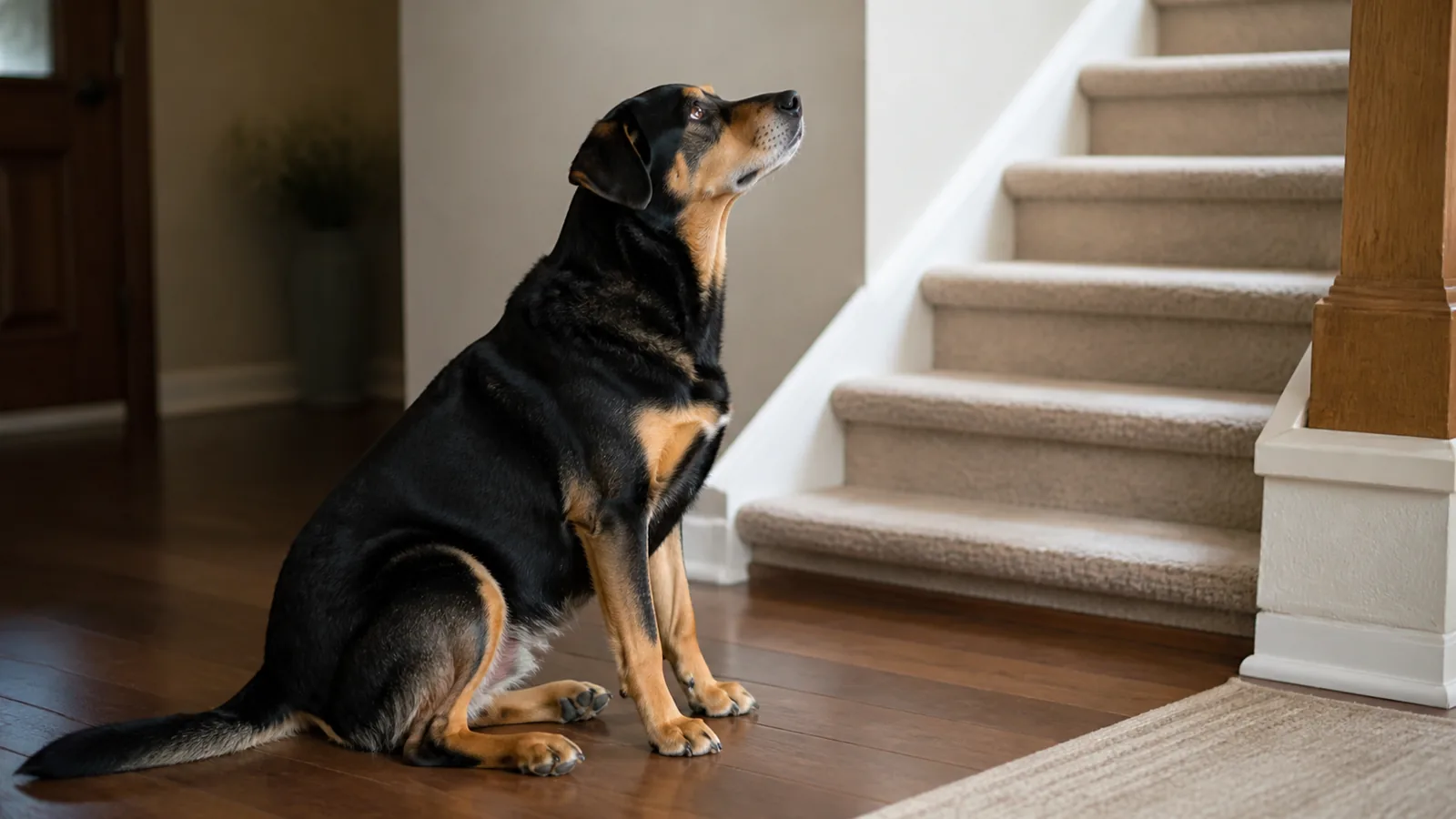
A sore hip is a workup we do often at Soda Springs Animal Clinic, and it starts with a hands-on exam and digital X-rays that show us the joint from the inside. From there we build the medical side of the plan: pain control, weight and activity guidance, and platelet-rich plasma therapy for chronic arthritis and joint injuries. When a case moves toward an orthopedic procedure, we coordinate that care and stay with you through recovery here in Soda Springs. If your pet is slowing down, hesitating at stairs, or getting less relief from medication than before, reach out to us and we will get a look at what is going on.
Hip Surgery Basics Before You Decide
- In an FHO, the ball of the hip comes out and scar tissue grows a cushioned false joint in its place, a trade that suits smaller dogs and most cats.
- A total hip replacement rebuilds both halves of the joint with implants, usually for bigger, more athletic dogs who need true hip mechanics back.
- Surgery almost always follows a trial of medical management, so weight control, pain medication, and rehab come first for most pets.
- Puppies in high-risk breeds have time-sensitive options that close once arthritis sets in, which is why early X-rays beat waiting for a limp.
Which Hip Problems Send Pets Toward Surgery?
Four problems account for most hip surgery in dogs and cats: dysplasia, a hip that has slipped out of the socket, Legg-Perthes disease, and arthritis that has outrun its medication.
Hip dysplasia is developmental, meaning the joint forms poorly while a puppy or kitten is still growing. Canine hip dysplasia begins with a ball and socket that never quite fit each other, and the slack between them grinds the joint into arthritis over years, which is why Labradors, German Shepherds, Golden Retrievers, and Rottweilers so often stiffen up in middle age. Cats hide the same problem better, so feline hip dysplasia usually turns up as a cat who stops jumping onto the counter, sleeps somewhere lower than she used to, or gets snippy about being picked up, rather than as an obvious limp. Hip dysplasia screening grades how well the hips are formed using standardized radiographs, and in an at-risk breed it can name the problem long before the first sore morning.
Trauma writes a much faster story. Hip luxation means the femoral head has left the socket altogether, usually after a car strike or a hard fall, and surgery becomes the answer when the hip won't stay in place after it's been put back. Pets with shallow sockets from dysplasia come out more easily and stay out more stubbornly. A pet who suddenly won't put a back foot down needs to be seen right away, so call us during our open hours, and if it happens overnight, we have a veterinarian on call.
Legg-Perthes is the quiet one in small patients. Legg-Perthes disease cuts the blood supply to the femoral head and the bone underneath slowly collapses, which is why it shows up in small-breed dogs and young cats still under a year old, usually as a rear leg they stop using at all. Once the shape of the bone is gone, no medication brings it back, so surgery is what returns the leg to work.
Arthritis is the slow one. Osteoarthritis in dogs and cats doesn't always announce itself as a limp, and a cat who quits grooming her hind end or a dog who takes the porch steps one at a time is telling you the joint hurts every day. When that daily ache stops answering to medicine, weight control, and rest, worn-out hips become a reason to operate on their own.
Can a Painful Hip Be Managed Without Surgery?
Plenty of pets never reach an operating room. Medical management takes load off the joint and supports what's left of it, and in mild to moderate disease it buys years of comfortable living. The catch is consistency, because the plan works when every piece is running at once.
- Weight: Every pound off a sore hip is load the joint never has to carry, and lean pets stay comfortable on lower doses of everything else. Regular weight and body condition checks catch creeping gain before it undoes the rest of the plan.
- Pain control: Daily anti-inflammatories do most of the heavy lifting, often paired with gabapentin on the harder days. A once-monthly injection that interrupts the joint pain signal is now available for dogs and in a separate version for cats, which helps pets whose stomachs or kidneys can't tolerate pills.
- Supplements: Joint supplements work modestly and slowly, omega-3 fatty acids carry the strongest evidence of the bunch, and most pets need six to eight weeks on a consistent dose before anyone can honestly say whether it helped.
- Rehabilitation: Veterinary physical rehabilitation builds the muscle that braces an unstable hip, with underwater treadmill work, targeted strengthening exercises, and hands-on therapy handled much the way a physical therapist would handle a person's knee. We refer that work to a certified rehabilitation practitioner and stay involved in the plan.
- Regenerative options: PRP injections use your pet's own platelets to quiet inflammation inside a chronically sore joint, and that's something we do here.
- The house itself: Rugs over slick floors, a ramp instead of a jump into the truck, a litter box with one low side, and a supportive bed off the cold floor change a hip's day more than most families expect.
Never give human pain medication to a pet. Ibuprofen, naproxen, and acetaminophen are dangerous for dogs and can be fatal for cats at doses that sound harmless, and they close doors on the safe medications we'd rather use.
How Does an FHO Take the Pain Away?
A femoral head ostectomy takes the ball off the top of the thigh bone, so bone stops grinding against a damaged socket. Scar tissue fills the space and becomes a false joint, cushioned and pain-free but not perfectly mechanical. Smaller bodies handle that trade beautifully, and most cats do exceptionally well.
The trade-off is mechanics, not comfort. Without a true ball and socket, the leg travels a slightly shorter arc, the thigh may carry a little less muscle than its partner, and some dogs look stiff after a hard weekend. What they don't have is the pain that brought them in.
Body size drives candidacy. The classic guideline points to dogs under about 50 pounds, though heavier dogs with good muscling and realistic expectations can still do well. Cats of nearly any size are excellent candidates. So are young pets with Legg-Perthes, and any patient where replacement isn't feasible because of infection, anatomy, or the family's circumstances. Muscle is what holds this surgery up, so a lean, well-conditioned patient starts ahead.
Recovery asks for use, not rest. Gentle, frequent movement in the first days is what builds a good false joint, and most pets are using the leg steadily somewhere around six to eight weeks. Rehab isn't an optional extra here. It's how a good false joint forms. Cats often start touching the toe down within a few days on their own, and mostly need low-sided boxes, a step up to the couch, and a little patience while the muscle comes back.
What Does a Total Hip Replacement Actually Replace?
Total hip replacement rebuilds both halves of the joint, a stem and ball seated in the femur and a cup seated in the pelvis, and in appropriate candidates it restores close to normal hip mechanics instead of working around them. Success rates run high in well-chosen patients.
Size and job point toward replacement. Bigger dogs, athletic dogs, working and sporting dogs, and any patient whose family needs full function back rather than pain relief alone are the usual candidates. Cats can have the procedure too, at specialty centers carrying feline-sized implants, though it's far less common because most cats thrive after the simpler operation.
The hard part is the eight to twelve weeks of strict restriction while bone and implant lock together. Leash walks only, no stairs, no jumping in or out of vehicles, no zoomies on tile. For cats, the challenge is vertical: counters, cat trees, and windowsills all have to be off limits, which usually means setting up one small, safe room. Most dogs are back to full activity by three or four months, and many go on to do everything they did before the hip failed.
FHO or Hip Replacement: Which One Fits My Pet?
Body size and the goal do most of the deciding: cats and small dogs get excellent comfort from the simpler FHO, while large, athletic dogs who need full mechanics back are usually better served by a total hip replacement. Age, health, and how strict a recovery your household can run fill in the rest.
| FHO | Total hip replacement | |
| What happens to the joint | Ball is removed, scar tissue forms a false joint | Both halves replaced with implants |
| Best-suited patients | Smaller dogs, most cats, young pets with Legg-Perthes | Larger dogs, athletic and working dogs |
| Recovery style | Early, frequent use of the leg, roughly 6 to 8 weeks | Strict confinement for 8 to 12 weeks |
| Long-term function | Comfortable, with a slightly altered gait | Near-normal gait, stride, and stamina |
| What makes it work | Muscle and rehab, without question | The implant does the mechanical work |
| Relative investment | Lower | Considerably higher |
So the same set of X-rays can produce two different recommendations. A twelve-pound Terrier and a ninety-pound German Shepherd aren't solving the same problem, and neither are a retired house cat and a two-year-old dog who can't finish a hunt.
Should a Puppy's Hips Be X-rayed Before Anything Hurts?
Early films make sense in a high-risk breed, in a puppy growing fast, or in one whose back end already looks loose. The list of hip dysplasia treatment options is longest in a young puppy and gets shorter every month arthritis is allowed to build, which is the entire argument for taking a look early instead of waiting for a limp.
A set of in-house radiographs, usually with light sedation so the legs can be positioned properly, shows us how deeply each femoral head sits and whether the joint is already starting to change. Sometimes the pictures just hand you peace of mind. Sometimes they open a door that closes at a specific age.
What Should an At-Risk Puppy Be Eating?
The odds of developmental orthopedic conditions climb with how fast a large-breed puppy grows, which is why large-breed puppy formulas hold calcium and calorie density down instead of pushing a puppy to grow as fast as his genetics will allow. Free-feeding a Great Dane puppy pushes growth in exactly the wrong direction. Kittens are more forgiving, though staying lean matters for them lifelong too. Our wellness plans cover the growth checks that catch a puppy growing faster than his skeleton can keep up with, and a puppy fed appropriately and kept trim may never need a hip surgeon at all.
Are There Surgeries That Head Off Hip Dysplasia?
Two procedures exist for young dogs with real laxity and no arthritis yet, and both are timed to growth. Juvenile pubic symphysiodesis has to happen before roughly 20 weeks of age, when fusing one small section of the pelvis lets the rest of it rotate as the puppy grows and roof over the hip more completely than it would have on its own. A pelvic osteotomy, done later in the first year, cuts and rotates the pelvis directly to deepen the coverage over each femoral head. Neither is an option once the joint has already worn, which is the whole reason timing matters so much.
How Do We Sort Out the Right Plan Together?
It starts with hands-on work: watching how your pet moves across the room, feeling how far each hip travels and where the flinch comes, then radiographs to see the joint underneath. Not every sore back end is a hip, and cruciate ligament tears, lumbosacral spine pain, and neurologic disease can all look like hip pain from across the room, which is one more reason the exam and the films come before any surgical conversation. Bloodwork in our lab tells us what anesthesia would look like. Then we talk honestly about what each path asks of your household.
Advanced orthopedic procedures aren't done in our building. We handle soft tissue and routine surgeries here in Soda Springs, refer major hip work to orthopedic surgeons we trust, and manage the coordination, the records, and the pain control on both ends of it. Our veterinarians would rather you leave with a plan you understand than a decision made under pressure.
Hip Surgery Questions Pet Families Ask Us Most
Will my dog walk normally again after an FHO?
Most small and medium dogs return to running, playing, and hiking, though a trained eye may still spot a shorter stride on that side. What families notice is the change in mood: a dog who's willing again. The muscle work in the first three months does most of the deciding here, so dogs who stay lean and finish their rehab consistently look far better at a year than dogs who spent the recovery on the couch.
Is my cat too old for hip surgery?
Age isn't a disease, and plenty of senior cats come through orthopedic surgery beautifully. What matters is what the kidneys, heart, and bloodwork say about anesthesia, and whether the hip is truly the reason she's slowing down. Older cats often have more than one sore joint, so we look at the whole back end and the spine before pinning the problem on the hip alone.
How do I know when medication isn't enough anymore?
Watch what your pet has quietly stopped doing. Skipping the stairs, refusing the truck, needing two tries to stand, sleeping somewhere new, or getting grouchy about being touched over the hips all say the current plan is losing ground. Another sign is dose creep, where comfort only holds at the top of the range. That's the moment to come in and rethink, not to add one more supplement and hope.
You Don't Have to Sort Out Your Pet's Hips Alone
Hip decisions rarely have to be made this week. There's usually room to run the medical plan, watch what it gives back, and let the right answer come into focus with your pet in front of us instead of a diagnosis on paper. What suits a ten-year-old cat with a stiff back end and what suits a young shepherd who can't finish a hike are two different answers, and both are good ones.
If the limp is deepening, or the medication isn't doing what it did in the spring, schedule an exam with us at Soda Springs Animal Clinic. We'll take a careful look, tell you plainly what we see, and figure out the next step with you.