The dental home care products worth buying are the ones backed by real evidence, and those your pet will actually let you use. A toothbrush and pet-safe toothpaste used daily is the gold standard for both dogs and cats, but dental wipes, oral gels, water additives, and VOHC-accepted chews all have a place when daily brushing is not happening. The pet store shelf is full of products that promise fresh breath and do nothing for the disease growing under the gumline. Home care slows plaque between cleanings, but it does not get below the gumline where the worst dental disease lives, which is why professional cleanings with dental X-rays still matter.
Privately owned and rooted in rural Idaho, Soda Springs Animal Clinic walks pet families through which dental products are worth the money and which ones to skip. Our dental cleanings include full-mouth dental X-rays so we can find the infection, fractured roots, and bone loss hiding below the gumline, then we build a home care routine that fits your pet and your schedule. Honest answers about what works and what does not are the standard we hold ourselves to, and that extends to product recommendations. If your dog or cat has bad breath, yellow teeth, or you just want to start a home care routine, give us a call.
The Short List Worth Knowing
- Daily brushing is the most effective home care step for dogs and cats, and the research draws a sharp line on frequency: every other day works, once a week does not.
- Combinations beat any single product, because mechanical cleaning has to break plaque open before a chemical product can reach the gums at all.
- Wipes, gloves, and cloths test close to a toothbrush, which makes them real care for cats and brush-refusers rather than a fallback you should feel bad about.
- Nothing you do at home removes hardened tartar or treats disease under the gums, which is why professional cleanings with dental X-rays stay essential.
What Is Home Dental Care Really Buying Your Pet?
Home dental care matters because it slows the steady buildup of plaque and tartar that drives most dental disease in dogs and cats. Within hours of a meal, a sticky film of bacteria (plaque) coats the teeth. That is where trouble begins.
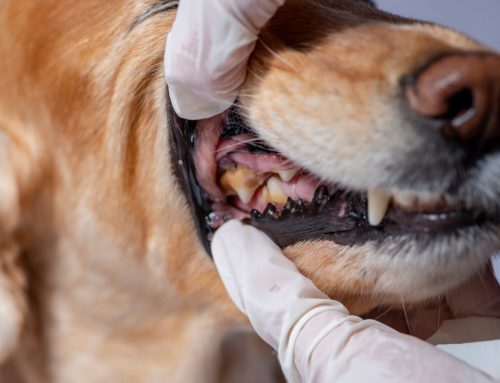
Left alone, plaque hardens into tartar, inflames the gums, and advances into periodontal disease, which quietly destroys the tissue and bone anchoring each tooth and can burden the heart, kidneys, and liver. It moves in stages: early on you see red, puffy gums (gingivitis), and left unchecked it progresses to loose teeth, bone loss, and infection you cannot see from the outside.
Here is the part to pay attention to. The work you do between cleanings decides how often your pet needs one and how invasive each one has to be. That is not a small thing out here, where the nearest specialty referral is a long drive and every cleaning is a day you plan around. Daily or frequent home care meaningfully slows the march. But it does not stop it, which is why professional dental cleanings under anesthesia remain the foundation that home care is built to support rather than replace. We fold that dental picture into our nose-to-tail wellness exams so nothing sneaks up on you.
Does the Toothbrush Still Deserve Its Reputation?
The toothbrush has earned every bit of its reputation, and nothing else on the shelf comes close. Plaque is a living bacterial film that wants to stay put, and dragging bristles across the tooth knocks it loose before it mineralizes into tartar that only a scaler can remove. No gel, chew, enzyme, or diet fully matches that. If you do one thing for your pet’s mouth, make it this.
How often do I actually have to brush?
Research on brushing frequency found that brushing every other day meaningfully reduced dental deposits over several months. Brushing once a week produced no significant benefit at all. Not a smaller benefit, not a slower one: none worth measuring.
That is worth sitting with, because the comfortable belief is that occasional brushing is good enough. The gap between daily and every-other-day is small. The gap between every-other-day and weekly is the difference between a routine that changes your pet’s mouth and one that mostly makes you feel better about it.
How do I get my dog or cat used to a toothbrush?
Go slow, let your pet set the pace, and reward often: cooperative care techniques turn tooth time into something your pet chooses to sit through, building from a quick muzzle touch to a finger brush and finally a full brush over days or weeks. Use a pet-safe enzymatic toothpaste in a flavor they like, and never human toothpaste, which contains fluoride and sometimes xylitol that are dangerous when swallowed.
If you are already certain your dog would never stand for it, the research says otherwise more often than not. Pets in those same studies adapted measurably over a few weeks of daily cleaning, with stress and anxiety scores dropping rather than climbing. “He’d never let me” is usually a statement about the first week, not a long-term truth when approached with the right training.
Technique differs by species. Brushing a dog’s teeth works best when you lift the lip, angle the bristles toward the gumline, and focus on the outer surfaces of the large cheek teeth in back, where plaque piles up fastest. Cats ask for a lighter touch, so brushing a cat’s teeth usually means a soft finger brush or a bit of gauze, seconds-long sessions, and unhurried handling that respects how much smaller and more sensitive their mouths are.
Aim for 30 seconds a side, brush at the same time each day so it becomes routine, and never force the mouth open, since one bad session can sour your pet on the whole idea. If you would rather see it in person, our team can demonstrate proper technique on your specific dog or cat.
My Pet Fights the Brush: Will Wipes or Gauze Fill the Gap?
They fill more of it than you would guess. A study comparing dental cleaning tools used daily found that a nylon glove and a microfiber cloth came close to matching a toothbrush for reducing plaque and improving gum health. That is not just a participation trophy. If bristles are never going to happen in your house, a cloth over a finger is real care with real data behind it.
Focus on what you can reach: the front teeth, the big canines, and the outer surfaces where buildup shows. Products like dental wipes pair that friction with active ingredients that discourage plaque. The limit is reach, since a finger cannot slip under the gumline or get behind the back molars. If you are unsure what fits your pet, we are happy to talk through your pet’s temperament and needs and build something realistic.
Are Enzymatic Gels, Sprays, and Powders Just Fancy Breath Fresheners?
They are not, but they are also not the whole plan. Enzymatic gels, powders, and dental sprays break plaque down chemically rather than scrubbing it off, so they contribute on days when brushing does not happen. These are genuine interventions, not placebos. They are also less effective than brushing at reducing deposits, and they do their best work when some mechanical action is spreading and activating them.
Application varies, which is the appeal for squirmy pets: gels go straight onto the teeth or gums, sprays mist into the mouth, powders sprinkle onto food, and most need no rinsing. Look for enzymatic ingredients and, ideally, the VOHC seal. Smear a dab of gel on the gum line, use a spray on a busy evening, or dust powder on dinner as backup, and let mechanical cleaning stay the centerpiece.
Do Water Additives and Oral Rinses Earn Their Spot in the Bowl?
They do, but only when combined with mechanical cleaning. Research on water additives found that an additive used alone, with no mechanical care behind it, did not significantly reduce dental deposits. Add that same additive to even a modest amount of mechanical care, some brushing or a daily chew, and the pair outperformed the mechanical care by itself. Water additives were also very effective when used right after a professional cleaning.
The proposed reason makes sense once you hear it. Plaque is a biofilm, a mat of bacteria with a protective structure of its own, and something has to break that mat open before an antimicrobial can reach the gum tissue underneath. Facing an intact biofilm, the additive simply cannot get in.
So here is the practical read: if your routine is a chew most days and a brush when you remember, an additive is the easiest upgrade available. If you don’t give a chew or brush, a water additive is probably not doing much at all.
Two cautions. Palatability is the real hurdle, since some pets notice the change and drink less, so start with a fraction of the recommended dose and build up while you watch that your pet keeps drinking normally. And check with us first if your pet has bladder or kidney issues, since fluid intake and certain ingredients matter more in those cases. Our in-house bloodwork and ultrasound help us tailor that guidance.
Can the Right Food Do Part of the Brushing for You?
It can, and for cats it does more than most families expect. Formulated dental diets rely on larger, fiber-woven kibble and tartar-control ingredients that scrub the tooth as your pet chews. Instead of shattering on the first bite, the kibble is designed to let the tooth sink in before it breaks, so the surface gets wiped as it passes through.
In a study of dental kibble in cats, a kibble engineered for exactly that mechanical-cleaning effect produced less gingivitis and less tartar than the other approaches tested. The honest conclusion is not that food replaces brushing, but for cats, who turn down a toothbrush far more often than dogs do, a well-designed dental diet is a serious intervention rather than a marketing claim.
Which Chews and Toys Clean Teeth Without Cracking Them?
Chews carry one of the better evidence bases in home care, and one of the sharper safety catches. A daily dental chew produced measurable reductions in gum inflammation, plaque, and tartar compared with no chew at all. The caveat: plenty of products marketed as dental chews do not actually perform, which is why independent testing matters more here than anything printed on the bag.
The biggest danger is a chew that is too hard, and we see the results regularly. Fractured teeth hurt and turn into tooth root abscesses, and often come from products marketed to clean teeth.
- Run the thumbnail test: If you cannot dent it with a thumbnail, it is too hard for your pet’s teeth.
- Skip the worst offenders: Dangerous chew objects like real bones, antlers, hooves, and rigid nylon crack teeth more often than you would expect.
- Pick products that give: Safe chew toys flex under pressure, gentle enough to spare enamel yet firm enough to scrub plaque. Textured dental chew toys built to grip a smear of enzymatic gel give plaque-scraping surfaces something to work against.
For a shortlist that fits your pet, ask us for personalized chew recommendations at your next visit.
Which Seal Separates Proven Products From Pretty Packaging?
The VOHC seal is your shortcut past the marketing. The Veterinary Oral Health Council is an independent group that reviews the data behind dental products and grants its seal only to those that meet defined targets for reducing plaque or tartar. Fresh-breath claims and clever packaging tell you nothing about whether something works. VOHC-accepted products carry independent testing, which is verification rather than a claim, and that short list is where your search should start.
Step back from the individual products, though, and the evidence keeps saying one thing: combinations outperform any single tool. Mechanical care breaks the biofilm open. Chemical care reaches the gum tissue that friction exposed. Cover both sides and you beat doing either alone, which means the structure of your routine matters more than which specific products are in it.
| Tool | What the evidence says | Where it fits |
| Toothbrush + paste | Strongest, but only at every-other-day or better | The mechanical backbone of any routine |
| Wipes, gloves, gauze | Close to a brush for plaque and gum health | The mechanical backbone when bristles are refused |
| Gels, sprays, powders | Real but modest on their own | The chemical layer over mechanical care |
| Water additives | Little to none alone; strong when paired | The cheapest upgrade to a light routine |
| Dental diets | Solid, and notably good in cats | Passive daily help for brush-refusers |
| VOHC-accepted chews | Among the strongest in home care | Daily mechanical care pets volunteer for |
Ask us which accepted products fit your pet’s specific needs, and we will tell you honestly which ones are worth the money. Our online pharmacy is full of vet-trusted options to take the guesswork out.

Where Does the Ceiling on Home Care Sit?
The ceiling sits at the gumline, and no product crosses it. Once plaque mineralizes into tartar, only a professional scaler removes it, and the most serious disease, the infection eating away at bone and root, hides where no brush or wipe can go.
Professional cleanings under anesthesia are what get past that limit. Anesthesia lets us scale below the gumline, polish every surface, probe each tooth, and take the dental X-rays that reveal hidden bone loss and fractured roots. It is worth understanding the anesthesia-free dental risks, because scraping only the visible crown leaves disease untouched beneath it and can hand your pet’s family a polished smile that hides an unhealthy mouth. A cleaner-looking tooth is not a healthier one.
How often your pet needs a cleaning depends on breed, size, genetics, and how well home care is going, and small dogs tend to need them sooner. The better your routine, the longer the stretch between visits. When it is time, we schedule a dental exam and cleaning that includes those full-mouth X-rays.
Where Should a New Home Dental Routine Actually Begin?
Start small, layered, and forgiving on the hard days, because the routine you will actually keep beats the perfect one you abandon in a week. Attach the routine to something you already do, like the evening walk or the last treat of the night, and it stops being a separate chore you have to remember. A few seconds counts on day one.
- Layer from the start: Do not treat one product as the whole plan. Brushing plus an additive, or a chew plus a spray, is what the evidence favors.
- Keep a backup for the hard days: It’s not easy to brush daily. Hand over a chew, use a spray, or add a water additive and dust powder on dinner, then return to the brush tomorrow.
- Share the job: Get the whole household involved so it does not fall on one person.
- Adjust over time: Your pet’s tolerance and preferences will shift with age, and the plan should shift with them.
Any home care beats none, so reach out for coaching and product guidance whenever you hit a wall.
Dental Home Care Questions We Hear Most
How long does it take for home dental care to make a difference?
You will often notice fresher breath and calmer gums within a few weeks of consistent care, but the real payoff is long-term: slower plaque buildup and longer stretches between professional cleanings. Dental disease develops over months and years, so this is a marathon, not a sprint. The key is sticking with it, even imperfectly, day after day.
I can’t brush. If I can only add one thing, what should it be?
A dental chew or dental diet. Most pets love them, and the mechanical scraping action of chewing provides the biggest benefit.
My pet already has bad breath. Is it too late to start home care?
It is never too late, but bad breath is often a signal that disease is already underway below the gumline, where home care cannot reach. The best move is to have us examine your pet’s mouth first. If a cleaning is needed, we can reset the mouth, and then home care picks up from a clean starting point and keeps it healthy far longer.
Are anesthesia-free dental cleanings a safe shortcut?
Anesthesia-free dental cleanings are not a safe shortcut. They only scrape the visible part of the tooth and cannot clean below the gumline or safely evaluate each tooth, which is exactly where serious disease lives. They can leave a mouth looking cleaner while disease continues underneath, and they can be stressful or unsafe without proper sedation. A polished crown is not the same as a healthy mouth.
Let’s Map Out the Right Routine for Your Dog or Cat
No single product carries a mouth on its own, and the evidence is refreshingly clear about what does: mechanical care and chemical care layered together, kept up consistently, alongside the professional cleanings that reach what a brush never can. The healthiest mouths belong to pets whose families pair those two things, and that partnership is exactly what we are here for.
Whether you need help choosing products, learning technique, or building a plan that fits your pet and your life, our team will meet you where you are. When you are ready, book a dental consultation and we will take a look, answer your questions, and map out the routine that keeps your dog or cat comfortable for years.