A vet visit gets less stressful when your pet has practiced the handling beforehand, at home, long before they get to our exam room. Cooperative care means teaching your dog or cat to take part in being handled instead of just enduring it, using short, positive sessions with paws, ears, and mouth so none of it is new the day it counts. Fear of the vet is normal learning, not bad behavior, and cats are every bit as trainable as dogs with the right rewards. This matters more than comfort alone, because if your pet panics, they may need sedation, get a shorter exam, or miss care altogether once you start dreading the trip.
At Soda Springs Animal Clinic, we're happy to help design a plan with you to help decrease your pet's fear of the vet. Tell us the triggers when you book and we can work around them, whether that means a quieter time on the schedule, treats and a few extra minutes before we start, or saving the scariest part of the exam for last. Our wellness exams for dogs and cats go nose to tail, and our in-house diagnostics help us check whether a hidden sore spot is behind the reaction. If your pet dreads coming in, give us a call and we will make a plan together.
The Quick Version on Cooperative Care and Low-Stress Handling
- Fear of the vet is normal learning rather than bad behavior, and what gets learned can be unlearned with practice.
- Short handling sessions at home, a few seconds at a time, lead to calmer appointments and fewer pets who need sedation for routine care.
- Happy visits and early socialization rewrite what our building predicts before fear has a chance to settle in.
- Cats take to this as readily as dogs do, with smaller steps and better snacks, and reward-based training is the method that works for both.
Why Is My Dog or Cat So Afraid of the Vet?
From your pet's side of the leash, the math is simple. For most dogs the clinic is the one building where strangers touch them all over and then something stings, so less stress at the vet starts with changing what that building predicts long before appointment day.
Handling is the other half of it. Nobody at home routinely spreads a set of toes, looks deep into both ears, or opens a mouth wide to count teeth, so when a stranger does all of that at once on a slick table, your pet has no reason to believe any of it is safe. Cats carry this the furthest, and a cat rattled after a vet visit may hide, skip meals, and swat at housemates for days at home, then fight the carrier for years afterward.
One thing is always worth ruling out first. A dog who has let you towel their feet for years and suddenly won't isn't being stubborn, because sore joints, a cracked nail, or an infected ear can turn an ordinary touch into a warning. A hands-on exam, a sample checked under our microscope, or an x-ray of a painful leg usually sorts out which one you're dealing with.
What Should I Tell the Vet Team Before an Appointment?
The most useful thing any family can hand us is a list of triggers: the nail trim that ended badly, the thermometer, men in ball caps, the barking dog in the lobby. Nobody here judges a scared pet or the person on the other end of the leash. Knowing what sets your pet off lets us keep stress low from the first minute.
A pet who is already over their limit in the waiting room is much harder to help by the time the exam starts, so a lot of what we can do happens before you reach the door.
- Skip the lobby: Wait in your car or go straight into a room, and we'll come find you when everything is ready.
- Control the audience: Fewer hands, quieter voices, and one person doing the handling instead of three.
- Pick a calmer slot: Some hours run quieter than others, so tell us when you book and we'll aim for one of them.
- Reorder the exam: The scariest part goes last, paired with the best treat, with breaks whenever your pet asks for one.
- Bring the good stuff: A favorite lickable snack, a towel that smells like home, and a hungry pet if it's safe to hold breakfast.
None of that costs anything but a heads-up, and it changes how the entire appointment goes.
Do Happy Visits Really Change How a Pet Feels?
Happy visits are trips to the clinic where nothing medical happens at all, just treats on the scale, a scratch from whoever is at the front desk, and a sniff around the lobby before heading home. A few of those shift what the building predicts, from needles to something worth walking into.
Fear runs on prediction, which is why a new pattern beats reassurance. Five-minute stops repeated a handful of times do far more than one heroic hour, and Soda Springs is small enough that swinging by on your way through town isn't much of a detour. Our front desk can tell you which stretches of the day tend to be quiet.
Why Do Happy Visits Matter Even More for Puppies and Kittens?
Puppies and kittens move through an early socialization window when new experiences file themselves away as normal instead of frightening. Young animals who come in during those months for a weigh-in, a few treats, and some friendly handling often grow into adults who take an exam in stride.
That's why gentle handling is built into our puppy and kitten wellness visits, and why we're glad to help you time a treat-only stop for a calm stretch of the day.
Why Does Cooperative Care Matter Beyond a Calmer Appointment?
Cooperative care teaches a pet to volunteer for handling rather than tolerate it, so a paw hold or an ear check becomes something they opt into for a treat instead of something they survive. The exam room asks for skills that are much easier to learn at home first.
A dog who has practiced having paws held, ears touched, and a mouth peeked into, all paired with food, walks in already fluent in what the appointment requires. One meeting those sensations for the first time, from a stranger, in an unfamiliar room, can only endure them. The difference shows up in places families don't expect.
| What improves | What that looks like |
| Sedation | A pet who accepts awake handling can often have routine care done awake, with less medication and a shorter day |
| Everyday grooming | Nail trims, brushing, and ear cleaning stop being a two-person job |
| Earlier answers | Hands on your pet every week means lumps, sore spots, and gunky ears get noticed sooner, while they're still small problems |
| Safety | Nobody gets bitten or scratched, not you, not us, not the neighbor's kid |
| Home treatment | Pills, drops, and bandage checks stop being a daily standoff |
Recovery at home is where this pays off most, since two weeks of incision checks, pills, and giving ear and eye drops go very differently with a pet who already trusts your hands.
How Do You Start Cooperative Care Training at Home?
Start smaller than feels necessary. Sessions run in seconds rather than minutes, every touch gets paired with food, and your pet sets the pace: leaning in means keep going, leaning away means the step was too big and needs to shrink. Thirty seconds most days beats one long session on Sunday.
A chin rest is the foundation most families start with, because a pet who parks their chin in your palm for a treat has just handed you a way to hold still that they can end whenever they want.
| Skill | How to practice it | What it builds toward |
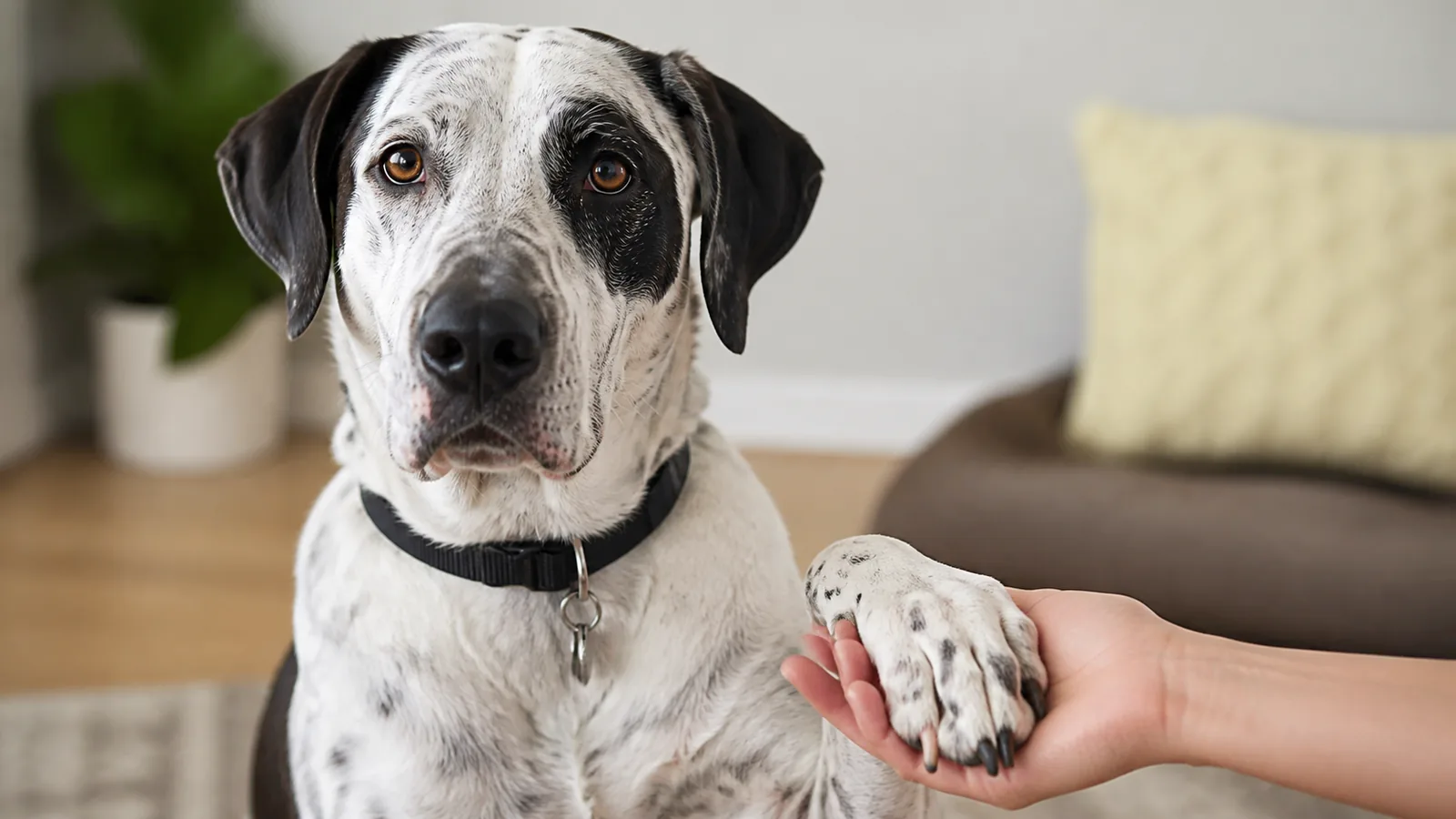
| Paws and toes | Touch one toe, treat, stop. Later the clippers come out, earn a treat, and go away again | Nail trims that don't need a second set of hands |
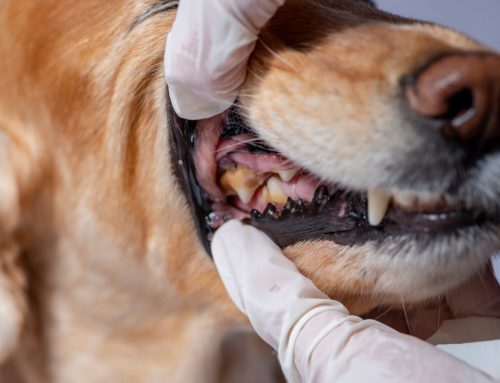
| Mouth peeks | Lift a lip for one second, treat, done | Tooth brushing and a real oral exam |
| Body sweep | Run both hands down the back, ribs, belly, and tail in the same order every time | A home exam that catches changes early |
| New surfaces | Step onto a mat, a bath towel, a bathroom scale | Tables and scales that feel familiar |
| Objects and duration | Touch with a spoon handle, then something like a stethoscope, holding for as long as a real exam step lasts | Strangers holding instruments |
The mouth work is the one families thank themselves for later, because it's the same skill that makes tooth brushing possible at home, and brushing is what stretches the value of professional dental care between cleanings.
Does Cooperative Care Work for Cats?
Cats belong in this conversation as full participants, not an afterthought. The same rules apply to cats in smaller increments and with better snacks, and training cats to take part in their own care can get as far as calm carrier entries and standing still for an injection when the pace stays theirs.
Feline medicine has been clear for years that positive reinforcement, not scruffing or heavy restraint, keeps cats willing. The trust you bank on ordinary Tuesdays is what gets spent on a bad day. A cat who lets us work is a cat we can start treating instead of spending the first ten minutes on restraint or administering a sedative.
Why Do the Carrier and the Car Set the Tone for the Whole Visit?
For most cats and small dogs the appointment goes sideways before the car even starts, usually because a carrier surfaces only to go to the vet and the car never goes anywhere fun. A pet who got chased, cornered, and jammed into a box arrives already past their limit.
So when we open the exam room door, we aren't starting from neutral. We're starting in a hole that took twenty minutes at home to dig. A vet visit begins at home, first by resetting the negative association with the carrier and car.
How Do You Teach a Pet to Stop Dreading the Carrier?
The repair is slow, unglamorous, and effective, and it generally takes a few weeks. Carrier training works by leaving the carrier out year-round as ordinary furniture, with soft bedding inside, treats appearing in it at random, and the occasional meal served in the back.
- Keep it visible: A crate that lives in the closet stays a warning sign, while one parked by the couch turns into a nap spot.
- Steady the ride: A towel over the top and a seatbelt through the handle stop the sliding and swaying that make the trip feel worse.
- Change what the car predicts: Some drives should end at a park, a friend's driveway, or back at your own door with something delicious.
- Try calming pheromones: A synthetic pheromone spray in the carrier and the vehicle settles some pets noticeably.
- Build up loading: Feed meals inside with the door open, then closed for a moment, then take a lap around the block.
It pays off on appointment morning, when your pet strolls in under their own power instead of becoming impossible to find.
Why Does Positive Reinforcement Work When Punishment Backfires?
Fear cannot be punished out of an animal, and aversive training methods like prong collars, scolding, and forced restraint raise fear and the risk of aggression without ever teaching a pet what to do instead. Reward-based work does the opposite, naming the behavior you want and breaking it into steps small enough to keep succeeding.
A dog who growls at the nail clippers is handing you information. Correct that growl and the fear stays exactly where it was, while the warning that used to come before a bite is gone. Same story with a cat dragged out of a carrier by the scruff: quicker today, harder every time after.
How Do You Match the Treat to Your Pet's Stress Level?
Two ladders make this training work. A treat ladder ranks rewards from everyday kibble at the bottom up to the one food your pet would sell you out for, saved for the hardest moments. The second ladder tracks how well they're coping.
Pets escalate in order, and the stress ladder runs from lip licking and looking away, through freezing and turning the head, up to a growl or a bite, with every rung asking for the same thing, a break.
Honoring the quiet ones early keeps a session below the point where learning shuts off, and that's how you build trust sturdy enough to hold up in a frightening moment. Match the right treat with the right rung of the ladder, and your job gets easier.
When Do Pre-Visit Medication and Muzzle Training Come In?
When fear outruns training, medication given at home before an appointment brings panic down far enough that your pet can eat, notice what's happening, and learn from it. That isn't sedation for convenience, and it isn't a failure on anyone's part. It's a bridge that makes the training possible.
Most pets need that bridge for a season rather than forever, and the right choice depends on species, health history, and what went wrong last time. Ask our veterinarians about pre-visit medication several days ahead so there's time to sort out the dose and the timing before you're due to come in.
How Do You Train a Dog to Wear a Muzzle?
A muzzle is safety equipment, closer to a seatbelt than a punishment, and it teaches best on days when nothing is wrong. Basket muzzle training on calm days turns the muzzle into a treat dispenser, and the basket style still lets a dog pant, drink, and take food on the day it is actually needed.
Needing one says nothing about a dog's character. Any dog in enough pain or fear may bite the people trying to help, including the ones they love most, and gear they already like keeps a hard day safer for your dog, your family, and everyone here.
Questions We Hear About Scared Pets and Vet Visits
Is my dog too old to start this?
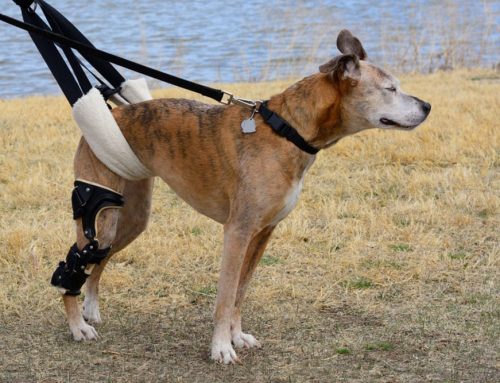
Age doesn't close the door. Older dogs learn cooperative care well, they just tend to need more repetitions and shorter sessions, since they've had years to practice the opposite. Start with handling your dog already accepts and build outward from there. One caution for seniors: arthritis makes lifting a paw or holding a position uncomfortable, so if a formerly easygoing dog starts objecting, let us check for pain before you add more training.
Will pre-visit medication leave my cat groggy for days?
The goal is taking the edge off fear, not flattening a cat. Most cats given a well-chosen option stay awake, eat treats, and respond to you, they're simply able to think instead of panic. Some sleepiness later that day is common and wears off. We choose based on your cat's health history and start conservatively, then adjust after seeing how the first appointment goes, because the right combination is rarely a guess on the first try.
How long before I see a difference?
Many pets show visible progress in two to four weeks, and consistency matters far more than session length. Thirty seconds a day, most days, outperforms a twenty-minute session every Saturday. Handling skills like chin rests and paw touches often come along quickly, while carrier and car work usually takes longer because the old association runs deeper. If something stalls out for a couple of weeks, the step is probably too big rather than the plan being wrong.
Building a Low-Stress Plan at Soda Springs Animal Clinic
A pet who can be handled is a pet who can be helped, in our exam room, on your kitchen floor, and on the hardest day of their life. A few minutes of practice a week buys calmer appointments, safer care, easier treatment at home, and an animal who trusts your hands when it counts most.
If the carrier is a battle or the exam turns into a wrestling match, tell us. That's information we want, not a confession, and it changes how we plan the day. Book a visit with us at Soda Springs Animal Clinic, let us know your pet needs extra time and a gentler pace, and we'll meet them where they are.