If your dog has come home from daycare with a cough, loose stool, a limp, or a scrape nobody mentioned at pickup, those are the problems worth watching over the next few days. Bordetella and DHPP vaccines cover kennel cough and the worst of the contagious stomach bugs, but parasites like giardia travel through shared water bowls, and no shot protects against them. Injuries come down to how the facility groups dogs, how closely staff watch play, and how honestly they report what happened. Most of what comes home stays minor when you catch it early, and a pattern of problems after visits usually points to the fit rather than to your dog.
A limp or a cough that starts the night after pickup is easy to second-guess, and Soda Springs Animal Clinic keeps room for urgent cases so whatever came home with your dog can be checked the same day. The vaccines most daycares ask for are part of our routine wellness care in Soda Springs, which makes clearing your dog for a trial day a quick visit rather than a scramble. If group play turns out to be more than your dog enjoys, our boarding comes with on-site medical support and a quieter, more structured day. Get in touch if your dog is not bouncing back the way you expected.
Ten Minutes at the Front Desk
- Ten minutes of pointed questions at the front desk reveal more than the tour does.
- Vaccine requirements lower the odds of contagious illness without erasing them, and nothing on the required list covers parasites like Giardia.
- Group play suits a lot of dogs and doesn't suit others, and where your dog lands can shift with age.
- A wellness visit a week or two before a trial day keeps vaccines, prevention, and paperwork off the morning of.
What Separates a Well-Run Daycare From a Clean Lobby?
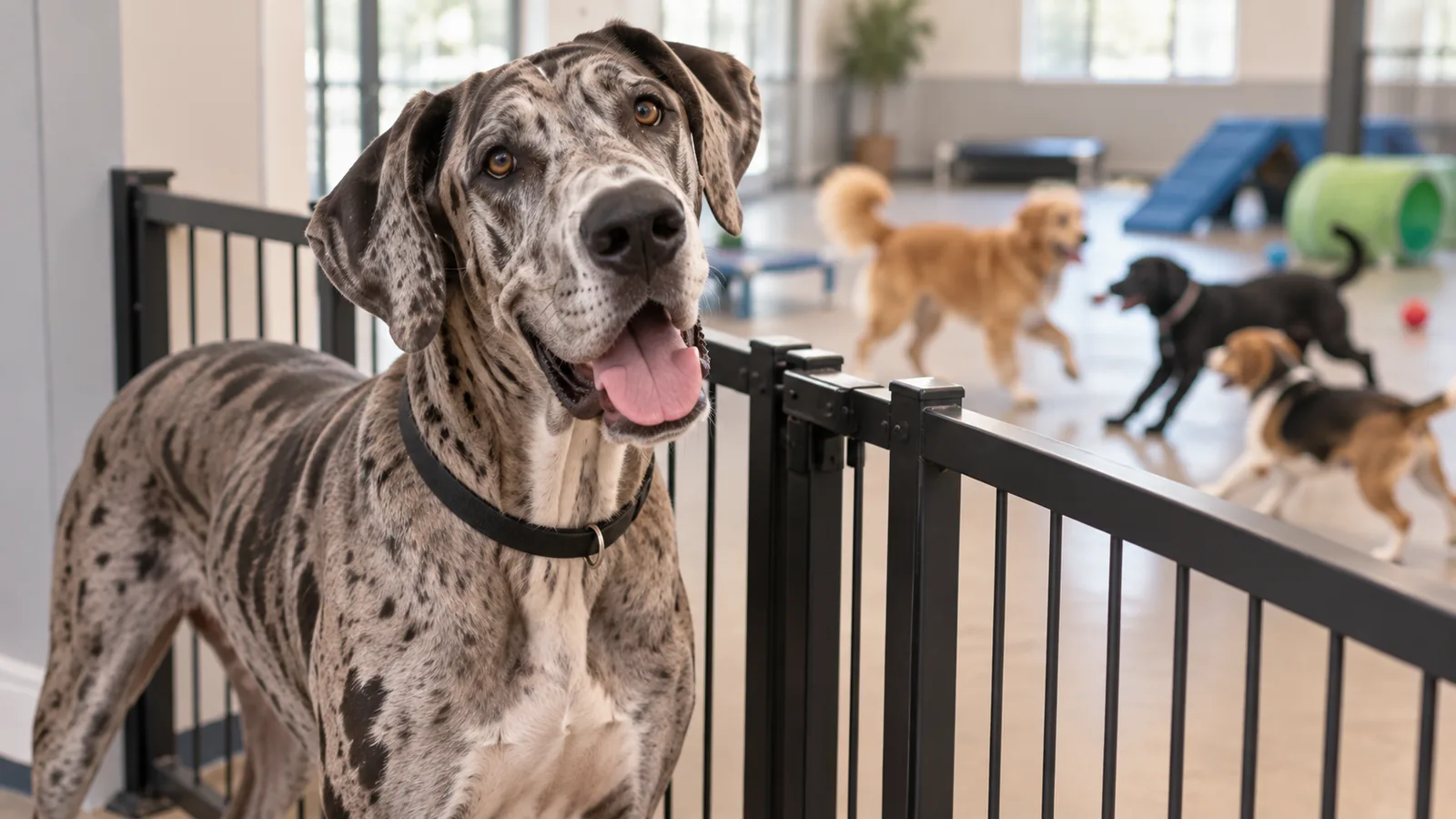
A tidy front desk tells you how a facility greets people, not how it runs the play floor. Safe group play depends on small groups matched by size and play style, handlers who interrupt arousal before it escalates, and rest built into the day rather than offered only when a dog melts down.
Two places on the same street can run very differently. Confidence comes from structured socialization with well-matched playmates and supervised breaks, not from turning a dog loose into a crowd.
| Ask this | What a solid answer sounds like |
| How many dogs per handler? | A specific number for each group, plus who covers staff breaks |
| How are dogs grouped? | By size, age, and play style, with slow, controlled introductions |
| What training do handlers have? | Hands-on training in body language and de-escalation |
| Do you screen new dogs? | A temperament check and a short trial day before any full session |
| What happens when a dog gets stressed? | A quiet break before it escalates, and a note to you later |
| Can I watch the play area? | Yes, in person or by camera, during real play hours |
| When do dogs rest? | Scheduled downtime for every dog, not just the ones who crash |
| What if my dog is hurt or gets sick? | A named protocol: who calls you, how fast, and which clinic they use |
| How do you verify vaccines? | Records checked before day one and tracked as they expire |
Vagueness is the tell. Forty dogs who "all play together," no screening, no rest, staff who can't describe what they'd do about a scuffle: any one of those is reason enough to keep looking. A wellness exam before a trial day covers the other half, confirming vaccines are current, prevention is on board, and there's no sore hip that would make an afternoon of wrestling a bad idea.
What the Facility Itself Should Tell You
Buildings reveal how a place copes when conditions get hard. Southeast Idaho hands daycares single-digit mornings and dry, bright summer afternoons in the same year. Ask about heating and cooling, what replaces yard time on the worst days, and who's watching the dogs most likely to overheat.
- Climate and heat: Ask how the indoor space is cooled in July and heated in January, and how many water stations sit in the play yard. Short-nosed breeds like pugs and bulldogs, older dogs, overweight dogs, and dogs with heart or breathing trouble hit their limit long before the rest of the room. Staff should be able to say what heavy panting or brick-red gums prompts them to do.
- Enrichment on indoor days: Snow days and smoke days happen here. Puzzle feeders, scent games, and rotating small groups keep a bored room from turning into a chaotic one.
- Toys and food: Many good facilities keep toys and chews out of group play entirely, since resource guarding is a top trigger for fights.
- Cleaning: Ask what they disinfect with, how often, and what happens to yard waste, since contaminated ground is how parasites move.
- Footing: Slick concrete, poor drainage, and hard stops at full speed cause more injuries than fights do.
If your dog comes home panting hard, wobbly, vomiting, or bright red in the gums after a warm day, that's an urgent visit rather than a wait-and-see. Don't ice a hot dog down or submerge them in cold water; cool tap water and airflow on the way to us is the safer first move. We see urgent cases during our open hours, and a doctor is on call after hours for emergencies.
Does Every Dog Belong in Group Play?
Plenty of dogs love the chaos and plenty quietly hate it, and both are normal. Every dog sits somewhere on a spectrum of dog tolerance, and that spot moves over a lifetime as adolescents get pushy, adults get selective, and seniors lose patience for bouncy play.
A dog having a good time moves loosely, takes his own breaks, and comes back for more. Stiff posture, a tucked tail, lip licking, and repeated attempts to leave the group are canine body language worth taking seriously. So is a dog who used to drag you through the door and now plants his feet in the parking lot, sleeps for two days after every visit, or starts snapping at the household's other dog.
If your dog is anxious around strangers or reactive on leash, our veterinarians can help you weigh a trial day and check whether pain or a thyroid problem is shortening his fuse. Deciding group play isn't for your dog isn't a failure. It's information.
When Boarding Is the Better Call
For dogs who'd rather have a person than a pack, group play is a poor trade. The same goes for dogs with chronic illness, a daily medication schedule, or a healing incision that one body slam from an enthusiastic labrador could undo. Boarding in a veterinary setting gives those dogs structure, individual attention, and staff who notice when an appetite or an incision looks off. Our kennel team provides one-on-one time in a clean, controlled environment. All dogs are let out regularly, and having a medical team in the same building means problems are handled promptly with a team you already know and trust.
Is Daycare Safer Than the Dog Park?
A good daycare screens everyone who walks in; the dog park screens no one. The biggest dog park risks are the dogs and people you know nothing about, since nobody at the park checks vaccine records, evaluates temperaments, or steps in when rowdy play tips into a fight.
Parks aren't off the table for every dog. A big open space at 6 a.m. with one familiar friend is a different experience from a crowded Saturday afternoon, and some dogs do best sniffing the perimeter while their person walks the loop. Temperament, age, joints, and vaccine status all shape where your dog is better off, and we're glad to talk it through with you.
How Old Should a Puppy Be Before Group Play?
General daycare groups usually aren't appropriate until the core puppy vaccine series is finished, since a developing immune system in a shared space is how parvo outbreaks start. A few daycares offer puppy-only rooms with tougher entry rules and more staff per dog, and those may be worth considering once most of the series is done.
Ask how closely the room is matched for age and size, how long a session runs before a required nap, how puppies are kept apart from adult dogs, how the room is cleaned between groups, and how many staff cover it. A tired, overwhelmed puppy learns that other dogs are stressful, which is the opposite of the point.
Where Should a Puppy Learn to Socialize?
The window for early socialization starts closing around twelve to sixteen weeks, well before the final parvo booster, and waiting for the last shot costs more than it protects. A well-run puppy class threads that needle: disinfected indoor floors, proof of vaccines for every participant, small vetted groups, and an instructor watching for the puppy who's shutting down. Dog parks are the worst option at this age, with unknown vaccine status on open ground. Our puppy wellness plans cover the vaccine schedule, and the timing conversation fits into those early visits.
Which Vaccines Will a Daycare Require?
Ask for the exact list and ask how it's verified. One overdue booster in the room puts every other dog at risk. Most facilities require DHPP, rabies, and Bordetella at minimum, with leptospirosis and canine influenza added depending on the region and the facility's own history.
| Shot | Protects against | How often daycares ask for it |
| Rabies | Rabies | Core; expect it on every list |
| Bordetella | The main organism behind kennel cough | Not core, but almost every facility insists on it |
| DHPP | Distemper, hepatitis, parvovirus, and parainfluenza in one shot | Core; no facility skips it |
| Canine influenza | Both circulating strains of dog flu | Not core; some facilities require it, and most do during an outbreak |
| Leptospirosis | Bacteria carried in urine and standing water | Core; many facilities require it |
Vaccine requirements say nothing about what's living in the soil. Shared yards are how intestinal parasites move between dogs, and that's the argument for keeping a current fecal exam and year-round prevention on the same checklist as the vaccine records. Heartworm, flea, and tick coverage runs all year here, even in the months when the bugs seem long gone. Most facilities also want a symptom-free stretch, often a couple of days, before a recovering dog returns.
What Spreads at Daycare, and What Comes Home?
No amount of mopping sterilizes a room full of dogs breathing on each other. What travels home is mostly respiratory or intestinal, and the real protection is current vaccines, consistent parasite prevention, and families who keep a coughing dog home instead of dropping him off anyway.
- Respiratory: Kennel cough is a mix of organisms, with Bordetella and parainfluenza the usual suspects behind that honking, goose-like cough. Canine influenza moves fast through group settings and looks sicker, with fever and lethargy alongside the cough.
- Intestinal: Giardia passes between dogs through contaminated water and feces, and a dog can shed it while his stool still looks normal, which is the whole argument for routine fecal testing. Parvovirus can linger in dirt and on floors for months, and ordinary cleaners rarely kill it. Vaccination, not mopping, is what protects a group of dogs.
A dog who's lethargic, vomiting, refusing food, or coughing hard after a visit needs a look, not a weekend of watching. Our in-house bloodwork, x-rays, and ultrasound sort a kennel cough from pneumonia, or a mild stomach upset from something that needs fluids, without sending samples away and waiting.
What Should You Check for After Pickup?
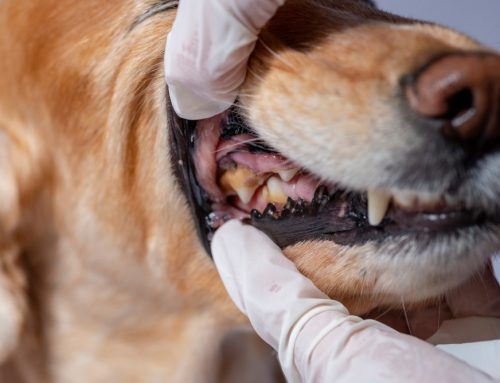
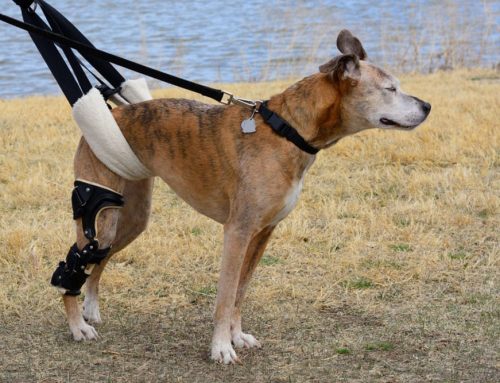
No daycare can prevent the little scrapes or minor injuries that come from two dogs having a great time wrestling. Expect the occasional scuff, broken nail, or missing patch of hair after a day of play time. Run your hands over your dog once you're home: ears, muzzle, neck, shoulders, and the base of the tail, where thick fur hides a lot. Watch him walk across the driveway, and look for limping, squinting, swelling, or a spot that makes him flinch. Most of what you find is minor; what you’re looking for are the signs of something more serious.
Bite punctures are the big one to watch for. A hole no bigger than a pencil point can sit on top of bruised tissue and bacteria pushed well under the skin, and that's the reason bite wounds get evaluated rather than watched, even when the fur closes over them and the dog acts fine. Small scrapes can be rinsed with warm water and kept clean while they scab over. Skip hydrogen peroxide. Ibuprofen, acetaminophen, and anything else from your own medicine cabinet can poison a dog at a fraction of a human dose.
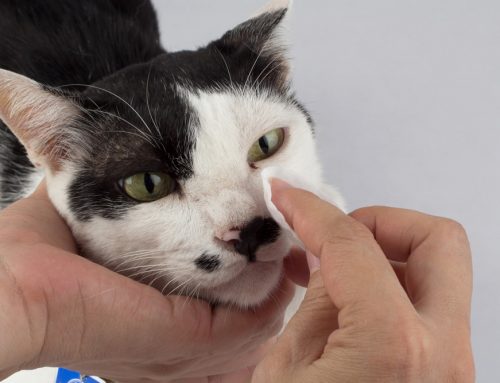
Eyes deserve their own close look. Squinting, tearing, or pawing at one eye after a day of face-to-face wrestling often means a scratched cornea, and that one shouldn't wait.
Setting Your Dog Up for a Good First Day
The trial day should answer one question: does your dog enjoy the group? Handle the health and the paperwork a week or two ahead, and give the staff the honest version of your dog, including the habits you'd rather not mention. Telling the team ahead of time that your dog doesn’t like Shepherds, humps when they are overstimulated, or is scared of men in hats helps them set your dog up for success.
Short Sessions and an Honest Handoff
Start with a half day or less and build from there. Long, emotional goodbyes at the door raise the temperature for everyone; a quick handoff genuinely helps. Tell staff about medication schedules, what sets off your dog's anxiety, physical limits like a bad knee or poor hearing, and any history of guarding food, toys, or a favorite person. Nobody is judging. Staff simply can't manage what they don't know about.
The Week-Before Checklist
- Book a visit one to two weeks out, leaving time for any booster or recheck.
- Update preventives and bring a fresh stool sample for a fecal exam.
- Gather documentation: vaccine records, the rabies certificate, and a written medication list with doses and times.
- Plan a short first day on a schedule where you can pick up early.
- Feed lightly beforehand. A full stomach plus hard play invites vomiting, and in deep-chested dogs it raises the stakes further.
- Know what a good pickup looks like: tired but settled, eating dinner, normal stool the next morning.
Daycare Questions We Hear Most
How many days a week is too many?
It depends on the dog. Some thrive on three or four days a week; others get over-aroused and start practicing rude play, which shows at home as a shorter fuse and worse manners. Two days a week with rest days in between is a reasonable starting point. If your dog is wiped out for a full day afterward, keeps coming home nicked up, or has started grumbling at housemates, cut back and see whether things settle.
Which scrapes can I handle at home?
A shallow scrape that's already scabbing over is usually fine to rinse with warm water and watch for a few days. Puncture wounds, anything near an eye or a joint, swelling that grows, heat, discharge, or a dog who won't let you touch the spot all deserve an appointment.
What if my dog suddenly balks at the door?
That refusal is a report. Common causes include a scary encounter with another dog, a group that's changed as new members joined, pain that makes jostling unpleasant, or simply getting older and preferring quiet. Start with a physical exam, since arthritis, dental pain, and failing eyesight all shorten a dog's patience for a crowd. If health checks out, the fit may have changed.
Before You Book That First Daycare Day
When daycare fits, you get a happy, tired dog and a few hours you don't have to think about. When it doesn't, you get a dog who dreads the car ride and a string of small problems that never quite resolve. A strong facility protects health, watches play closely, asks for the right vaccines, and treats rest as part of the day.
Our part is the health side: updating vaccines, checking whether your dog's joints and temperament are up for group play, and having the records ready before the trial day. Schedule a pre-daycare exam at Soda Springs Animal Clinic, and if group play doesn't suit your dog, we'll help you find the quieter option that does.