Most cat families want to know whether ear cleaning belongs in their routine at all, and for a healthy cat, it usually does not. A normal feline ear canal manages its own wax, and swabbing at it tends to push debris deeper, irritate the lining, or start the inflammation you were hoping to prevent. What does deserve your attention is change: head shaking, scratching, a dark crumbly discharge, an odor, or an ear your cat suddenly guards when you reach for it. Those signs point to something that will not clear on its own, like an infection, mites, or a polyp growing in the canal, and a problem left in place can work its way into the middle and inner ear.
An ear that is bothering your cat hurts now and gets harder to treat the longer it goes, so we would rather look than have you guess from the outside. At Soda Springs Animal Clinic, we can examine the canal, see the eardrum, and run ear cytology in our in-house lab, because yeast, bacteria, and mites each call for a different treatment and the microscope is what tells them apart. Ears are part of every nose-to-tail wellness exam we do here in Soda Springs, which is often how we find trouble while it is still easy to fix. If your cat is shaking their head, scratching, or something inside an ear looks off to you, have us check them.
The Four Things Your Cat's Ears Need From You
- Healthy feline ears clean themselves. Routine swabbing usually creates the irritation it was meant to prevent.
- Head shaking, dark debris, odor, or an ear your cat guards means something's wrong and needs a look, not a home remedy.
- Bacteria, yeast, and mites look identical from the outside. A swab under the microscope separates them before any medication goes in.
- An ear problem left alone can move past the eardrum, where it costs balance, facial nerve function, and sometimes hearing.
What Should a Healthy Cat's Ear Look Like?
A healthy cat's ear is pale pink inside, close to clean, with at most a trace of light brown wax near the opening. Nothing smells. Nothing is wet, crusty, or swollen, and your cat doesn't flinch when you fold the flap back. Ears like that need watching, not cleaning.
That small amount of wax isn't dirt. It traps debris, keeps the lining from drying out, and moves outward on its own. Strip it away every week and you remove the barrier along with the buildup.
Baselines vary. Some cats carry slightly more wax than their housemate and always have, and your own monthly look beats any chart for that reason: you're comparing your cat to your cat. A faint smudge that turns dark, wet, or one-sided within a month is the change worth acting on.
What Are the Warning Signs of an Ear Problem in Cats?
Head shaking, scratching at one side, dark or crumbly discharge, an odor, redness, or a cat who suddenly guards an ear all point to trouble inside the canal. Those signs don't resolve on their own, and they hurt. Anything that lasts more than a day or two deserves a hands-on look.
The quieter signals are easy to miss: a cat who stops grooming one side of her face, sleeps more, or holds an ear slightly lower than the other. Scratching hard enough can break blood vessels inside the flap and fill it with blood, leaving a warm, puffy ear pad called an aural hematoma that needs treatment of its own.
A sudden head tilt, circling toward one side, stumbling, or eyes that flick rapidly back and forth point toward vestibular syndrome, and disease that has reached the middle or inner ear is one reason a cat suddenly cannot find her balance. It looks frightening, and many of these cats do well once we find the cause. Bring your cat in rather than waiting to see whether the wobble passes.
What Ear Conditions Do Cats Get Most Often?
Feline ear trouble comes down to five things: infection in the canal, mites, an inflammatory polyp, dermatitis on the flap, or a growth. From across the room they look nearly identical, and a cat with any of them shakes their head and scratches. A swab under the microscope does most of the sorting.
| What you notice | Often points to | How it gets sorted out |
| Dry, dark, crumbly debris in both ears with hard scratching | Ear mites | Cytology, then treatment for every pet in the household |
| Brown or yellow discharge and odor, often one ear | Otitis externa | Cytology to name the organism, then drops matched to it |
| Head tilt, noisy breathing, or nasal discharge in a young cat | Inflammatory polyp | Sedated exam and imaging to map the growth |
| Red, crusted, scabby skin on the ear flap | Ear dermatitis | Skin cytology and a search for the allergy or parasite behind it |
| Dark bumps in the canal or an ear tip that won't heal | A benign or malignant growth | A biopsy read by a pathologist |
Why Do Cats Get Ear Infections?
Inflammation of the outer ear canal, known as otitis externa, is the ear problem cats develop most often and the one that resolves most cleanly when caught in the first week or two. Yeast such as Malassezia and ordinary skin bacteria live quietly on every cat until something changes their environment: moisture, allergies, mites, a polyp, or a canal scrubbed raw.
Left alone, that same infection can push past the eardrum, where otitis media and interna brings deep pain, loss of balance, facial nerve damage, and sometimes permanent hearing loss. Clearing the organism is only half the job. A cat who relapses every few months almost always has an allergy, a growth, or a chronically narrowed canal underneath, and naming that trigger is the other half.
What Do Ear Mites Look Like in Cats?
Ear mites travel easily between cats and dogs sharing a house, and the dry, dark, crumbly debris they leave in the canal is routinely mistaken for waxy ears. The itch is intense, far worse than the discharge suggests, and kittens arriving from a shelter, a barn, or a litter of siblings are the patients we diagnose most.
Otodectes cynotis is visible on a slide, which settles the question in minutes. Treatment has to cover everyone in contact, including the housemate whose ears look perfectly clean, or the mites shuttle between them and the itching restarts a few weeks later.
Can a Growth Cause a Head Tilt in a Young Cat?
Feline inflammatory polyps are benign growths that show up most often in cats under two years old, sprouting from the lining of the middle ear or the tube connecting it to the throat. Signs depend on where the growth takes root: a persistent head tilt in one cat, noisy breathing or nasal discharge in another.
Benign doesn't mean it fades on its own. Medication can calm the inflammation around a polyp, but removal is what fixes it, and mapping how far the tissue extends changes how surgery is approached.
What Causes Crusty, Irritated Skin on a Cat's Ear Flap?
Ear dermatitis in cats involves the skin on and around the ear flap rather than the canal. The redness, crusting, scabbing, and hair loss it causes call for allergy control or parasite treatment, not the drops that clear a canal infection. Flea allergy, food reactions, and environmental sensitivities top the list.
Ringworm, notoedric mange, sunburn on thinly furred tips, and less common immune-mediated disease can all produce a similar crusty margin. Cytology and a skin scrape separate them, which matters because an antifungal, a parasiticide, and an anti-inflammatory are three different plans.
Are Ear Tumors Common in Cats?
Most ear canal tumors in cats start in the ceruminous glands that produce wax along the canal lining, and chronic inflammation appears to raise the odds that one develops. The benign version, a ceruminous cystadenoma, looks like a cluster of dark blue or black cystic bumps in the canal and turns up most often in middle-aged and senior cats.
White cats and cats with thin, lightly pigmented ear tips carry the highest risk for squamous cell carcinoma, a sun-driven cancer that is far more treatable as a small crusty patch on the ear tip than after it spreads into deeper tissue. A scab on a white cat's ear that keeps healing and reopening through an Idaho summer is worth showing the veterinarians who examine your cat while it's still small and easy to surgically remove.
What Are the Do's of Cat Ear Care?
The do's are short. Look at your cat's ears about once a month, clean only when we've asked you to, get a diagnosis before any medication goes into an ear, and finish the whole course after the itching stops. Observation is the piece that catches problems while they're still small.
Make a Monthly Ear Check Part of Petting Your Cat
Fold the flap gently back while your cat is curled in your lap, look at the color, and take a quick sniff. That's the whole exercise. Ten seconds, no tools, no solution, nothing entering the ear.
What you're building is a memory of normal, because change is what matters and nobody else is close enough to notice it. Your monthly look and our nose-to-tail physical exam catch different things: you notice what changed, and we see down to the eardrum.
When Should You Clean Your Cat's Ears?
Cleaning has a short list of right reasons: we've recommended it, your cat is being treated for an infection or mites, or there's visible debris sitting in the ear. Outside of those situations, leave it alone.
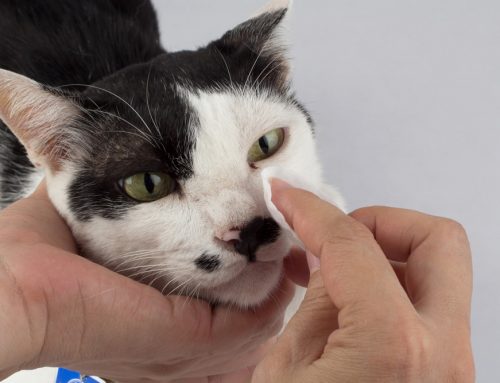
How to clean cat ears safely comes down to a veterinary-approved solution warmed in your hand, cotton balls or gauze, filling the canal, gently massaging the base for several seconds, then letting your cat shake the loosened debris out before you wipe the outer ear. A snug towel wrap and a treat afterward both help. If your cat cries, thrashes, or the ear looks painful, stop and call us. Pain in an ear is information.
Get a Diagnosis Before Anything Goes In
Ear cytology takes a swab of the canal and puts it under the microscope, the only reliable way to tell whether bacteria, yeast, or mites are driving the problem. Each answer points to a different medication. Rod-shaped bacteria call for a different drug than round ones, and neither responds to a mite treatment.
There's a second reason we look first. If the eardrum is torn, some common ingredients can reach the middle ear and damage hearing or balance. We run that swab in our own lab, and the plan comes from what the slide shows rather than a guess.
Finish the Full Course, Even After the Scratching Stops
Ears feel better days before they're healed. Stopping early leaves organisms behind in a canal that's still inflamed, and the relapse that follows is usually worse, sometimes with bacteria that no longer answer to the first medication.
A recheck confirms the ear is truly clear, often with a second swab, and it's a short visit. For cats enrolled in a wellness plan, unlimited office exams cover that follow-up. If travel lands mid-treatment, cats boarding with us keep their drops on schedule while you're away.
What Are the Don'ts of Cat Ear Care?
The biggest don't is cleaning ears that never needed it. Knowing when not to clean pet ears matters as much as knowing how, because scrubbing a canal that was already healthy strips the protective wax and irritates the lining enough to invite the very infection you were hoping to head off.
| Common mistake | Why it backfires | Do this instead |
| Cotton swabs inside the ear | Packs debris down against the eardrum and can tear it | Cotton balls or gauze, outer ear only |
| Vinegar, peroxide, alcohol, or oil remedies | Burns inflamed tissue and can reach the middle ear through a torn eardrum | A solution chosen after we've seen what's in there |
| Over-the-counter mite products with no diagnosis | Most itchy feline ears aren't mites, and the real cause keeps going | A swab first, then a product matched to the finding |
| Waiting weeks to see if it passes | Outer ear disease works its way inward | A visit once signs last more than a day or two |
| Ignoring a new bump or non-healing scab | Small growths are far simpler to remove than large ones | An exam while it's still tiny |
| Treating only the cat who's scratching | Untreated housemates hand the mites right back | Every cat and dog in the home treated together |
One line with no flexibility in it: never put human ear drops, leftover medication from another animal, or anything from the medicine cabinet into your cat's ear. Feline ears are small, the margin is thin, and the wrong ingredient in a ruptured ear can take hearing permanently.
Ear Questions We Hear From Cat Families
Do Kittens Need Their Ears Cleaned?
Kittens have self-cleaning ears just like adult cats, and routine swabbing isn't part of kitten care. What they do need is a look. A kitten who's shaking their head and digging at an ear gets a swab at that first visit, because untreated mites set up the inflammation that becomes a yeast or bacterial infection a few months later.
Can I Use My Other Cat's Leftover Ear Drops?
Leftover medication is a common reason an ear gets worse instead of better. The organism in this cat's ear may be nothing like the one those drops were prescribed for, the bottle may be past its date, and if this eardrum is ruptured, certain ingredients can reach the inner ear and affect hearing or balance. Bring the bottle with you, since knowing what's been tried helps.
Why Do My Cat's Ear Infections Keep Coming Back?
Recurrence almost always means the trigger is still in place: allergies most often, then a polyp, a canal scarred and narrowed by years of inflammation, or medication stopped as soon as the cat seemed comfortable. The fix is a fresh look rather than more of the same drops: repeat cytology, a careful allergy history, and imaging when something structural seems to be hiding behind the pattern.
Expert Ear Care for Cats at Soda Springs Animal Clinic
Healthy ears rest on two things: you noticing what changed at home, and us naming the cause before anything goes into the canal. Most ears we examine are a straightforward problem that clears with the right medication, and the rest are far kinder to treat when found early.
Please don't wait out a head shake, a new odor, or a scab that won't heal. Schedule an appointment with us in Soda Springs, and if something goes wrong with your cat after we've closed for the day, we have a doctor on call for emergencies.