Getting a cat with stomatitis out of pain usually takes more than a cleaning and a course of antibiotics. Feline chronic gingivostomatitis is an overreaction by the immune system to plaque and bacteria, and it inflames far more than the gums around one bad tooth. Treatment works by removing what the immune system keeps reacting to, which is why extracting teeth, usually every one behind the canines and sometimes all of them, gives most cats real relief when medication alone has not. Cats hide this well, so the soreness has usually been building for weeks or months before you see a change at the food bowl.
A stomatitis diagnosis is hard to sit with, especially when the relief your cat needs means losing most of their teeth. At Soda Springs Animal Clinic, full-mouth radiographs come with every dental procedure, so before we take a single tooth we know which roots are diseased and how far the infection runs below the gumline. Bloodwork comes first so we know how your cat's organs will handle anesthesia, and when extractions are what will finally bring relief, one technician does nothing but watch the monitors while a second works at the table with us. If your cat is drooling, dropping food, or turning away from the bowl, let us take a look.
What Stomatitis Does to a Cat's Mouth
- Stomatitis inflames the entire lining of the mouth, not just the gums around one bad tooth, and it ranks among the most painful conditions cats face.
- Cats conceal oral pain well. By the time you see drooling, dropped kibble, or a walk away from a full bowl, the soreness has usually been building for weeks.
- A sedated oral exam with full-mouth X-rays is what separates stomatitis from ordinary dental disease.
- Extraction brings real relief to most cats, and treating earlier in the disease produces the strongest results.
What Is Feline Stomatitis, and Why Does It Happen?
Feline chronic gingivostomatitis is an immune-driven condition where the body overreacts to plaque and other everyday substances in the mouth, and that inflammation spreads well past the gumline into the inner cheeks, the back of the throat, and the tissue anchoring each tooth.
Why one cat's immune system behaves this way and another's doesn't isn't fully understood. Calicivirus and herpesvirus turn up often enough in affected cats to count as contributors, though plenty of carriers never develop a sore mouth. Age isn't much of a guide either: most cases begin in adulthood, but some young cats become severely inflamed not long after their adult teeth erupt.
How Would I Know If My Cat's Mouth Hurts?
Most cats never cry out or refuse dinner outright. Oral pain shows up instead as small changes in routine: a slower approach to the bowl, a messier coat, more hours spent alone. It creeps in gradually enough that families chalk it up to aging. Any change in how your cat eats deserves a look.
Signs of Oral Pain You Might Notice at Home
Cats aren't drooly animals by nature. When you notice excessive drooling that dampens the chest fur or carries a sour odor, it usually points to pain inside the mouth rather than a harmless quirk. Here's what else families notice, often in hindsight:
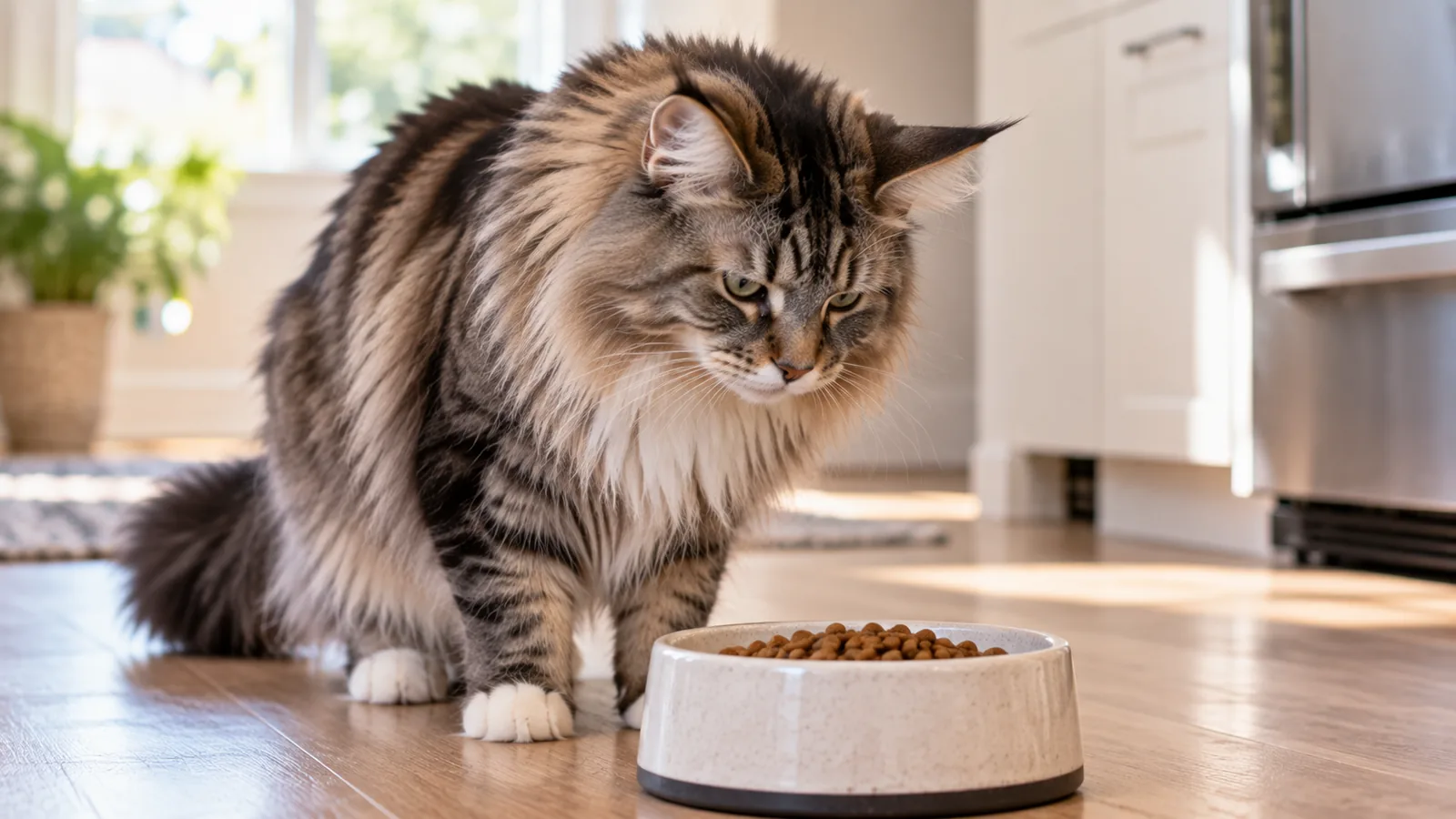
- Eating changes: your cat approaches the bowl, hesitates, then backs away, or chews on one side only.
- Dropped food: kibble falls out mid-bite, or gets swallowed whole to skip chewing.
- Pawing at the face: batting at the muzzle or shaking the head signals that something hurts.
- Less grooming: the coat turns greasy or mats along the back and hips where a tongue used to reach.
- Mood shifts: more hiding, less lap time, or a flash of irritation when you touch the head.
- Odor: breath strong enough to notice from the next chair over.
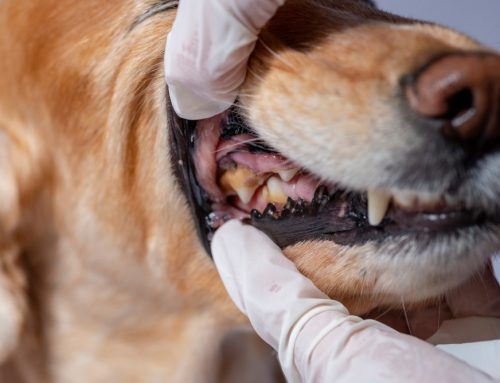
Preventive exams are often where we first see redness creeping along the gumline, months before anything looks wrong at home. The tissue far back in the mouth, where the upper and lower jaws meet, tends to be bright red, thickened, ulcerated, and quick to bleed at the lightest touch.
Is Stomatitis Just a Bad Case of Periodontal Disease?
Stomatitis is a different problem, not just a severe case of normal dental disease. Periodontal disease moves through defined stages that chip away at the structures holding a tooth in place, such as the gum attachment, the ligament, and the bone, while stomatitis inflames the entire lining of the mouth and doesn't settle down after a routine cleaning. Many cats carry both at once, which is a large part of why the two get confused.
| Feature | Periodontal disease | Feline stomatitis |
| Where the trouble sits | Gum, ligament, and bone around specific teeth | The whole mouth lining, including cheeks and throat |
| What drives it | Plaque and tartar accumulating under the gumline | An immune overreaction to plaque and normal oral bacteria |
| Comfort level | Often quiet until fairly advanced | Severe, and rarely subtle once you know the signs |
| Response to cleaning | Improves with professional cleaning and home care | Keeps flaring; scaling alone seldom holds |
| Usual treatment | Cleaning, targeted extractions, home care | Removal of most or all teeth, plus medical support |
Most of what drives oral inflammation sits below the gumline where no exam light reaches. Full-mouth dental radiographs are the only way to judge root integrity, bone density, and whether a retained fragment is quietly feeding the problem. A root tip left behind during an earlier procedure is a common reason a cat keeps hurting after treatment that should have worked. In-house dental X-rays let us find that fragment while your cat is already asleep.
What Does the Workup for Stomatitis Involve?
The workup answers three questions: how well equipped is your cat to handle anesthesia and healing, is this stomatitis or something else, and how much disease is hiding under the gumline. Answering them takes an exam, imaging, viral testing, and lab work, most of which are planned for the same day your cat comes in for the dental extractions that restore their comfort.
- Pre-anesthetic bloodwork: run in our in-house lab, it flags kidney, liver, or red cell problems that would change the anesthetic protocol before anyone starts.
- Oral exam: every surface gets probed and charted while your cat is fully anesthetized, the only honest way to grade how far the inflammation extends.
- Full-mouth radiographs: taken during that same anesthetic event, they show root disease, bone loss, and resorptive lesions no exam can detect.
- Biopsy if needed: When a lesion looks unusual or sits on only one side of the mouth, oral cavity tumors have to be ruled out first, and a biopsy is the right next step any time there's doubt. True stomatitis is symmetrical. Anything lopsided needs a closer look.
- Viral testing: feline calicivirus matters because carrier cats make up a large share of stomatitis patients, and a positive result changes how aggressively the inflammation is managed after surgery. Feline herpesvirus stays in the body for life and resurfaces during stress, which shapes the long-term medication strategy. FeLV and FIV testing rounds out the picture, since either one changes how a compromised immune system responds to surgery.
Scheduling dental cleanings and extractions with full-mouth radiographs as one anesthetic event keeps your cat's total time under anesthesia as short as possible, since diagnosis and treatment both happen while they're already asleep.
What Are the Treatment Options, From Medication to Full-Mouth Extraction?
Medication calms the inflammation and buys time, extraction removes the surfaces the immune system keeps reacting to, and a small group of cats need immune-directed therapy afterward. Most patients land on extraction, because it's the only step that addresses the trigger rather than the response to it.
| Approach | What it does | What to expect |
| Medical management | Suppresses inflammation and controls pain with steroids, analgesics, antibiotics, and antiviral support | Useful early or while preparing for surgery; the effect fades as the disease progresses |
| Full-mouth or near-full extraction | Removes the plaque-retaining surfaces, taking away the immune trigger | Substantial improvement or resolution in the majority of cats, with better odds the earlier it's done |
| Advanced immune therapy | Modulates the immune response in cats still inflamed after surgery | Reserved for non-responders, and coordinated through a referral hospital |
Can Medication Alone Get My Cat Comfortable?
Medication takes the edge off, and for some cats it's the right first move while we get them stable enough for anesthesia. A steroid quiets the swelling, pain relief such as buprenorphine or gabapentin makes eating tolerable again, antibiotics help when a secondary infection has layered itself on top, and antiviral or immune-support drugs are sometimes added for known calicivirus carriers. Never give your cat human pain medication while you wait for an appointment. Ibuprofen and acetaminophen are toxic to cats, and a single acetaminophen tablet can kill one.
Canned or softened food goes down easier, though some cats stop eating no matter what's offered. When a cat's mouth hurts too much to eat, a temporary feeding tube delivers food and medication without touching the painful tissue, and most cats tolerate one far better than their families expect.
None of this changes the immune response driving the disease. Steroids work beautifully at first, then need larger doses for less benefit, and long stretches of that therapy can leave a cat less likely to do well once surgery finally happens. Medication is a bridge, not a destination.
Why Full-Mouth Extraction Is the Treatment That Works
Removing every plaque-retaining surface takes away the trigger, and roughly 60 to 80 percent of cats improve substantially or resolve completely after full-mouth tooth extraction, with the strongest results in cats treated earlier in the disease. Most need everything behind the canines gone, and a fair number do better with all of it out.
Completeness makes or breaks the result. A retained root keeps the immune system engaged and the mouth sore. Post-operative radiographs confirm nothing was left behind before your cat wakes up. The veterinarian doing the extraction places local nerve blocks first. The tissue is numb before anything comes out and stays numb into recovery. Depending on the severity of the disease, and if periodontal disease has weakened the bone around the teeth, we may recommend a veterinary dental specialist. We’ll be honest with you about whether your cat’s treatment is better performed with us or elsewhere, and we’ll refer you to a practice we trust if needed.
What If Surgery Doesn't Fix It?
A minority of cats, often calicivirus carriers or those medicated for years before anyone reached for surgery, stay inflamed after the last tooth is gone. They're not out of options. Adipose-derived mesenchymal stem cell therapy resets the immune response instead of removing more tissue, and it has brought meaningful relief to cats who had run out of conventional options.
Cryotherapy, which freezes the diseased tissue, ranges from temporary comfort to lasting resolution depending on the patient. Longer antiviral courses paired with immunomodulating drugs such as cyclosporine or interferon are another route worth discussing. We don't perform stem cell therapy or cryotherapy here; we refer those cases to a veterinary dental specialist, make the arrangements, and stay involved in follow-up care.
How Will My Cat Eat Without Teeth?
Cats manage remarkably well without teeth. Most gum canned food comfortably, plenty go right back to crunching kibble by swallowing it whole, and many eat with more appetite a few weeks after surgery than they did for months beforehand.
- The first days: injectable and take-home pain medication keep your cat comfortable while the gum tissue closes over the sockets.
- Food: soft or moistened meals while healing is underway, usually a matter of weeks.
- Medication: antibiotics when they're indicated, and any steroid tapered down as the tissue settles.
- When to call us: a cat who still won't eat 48 hours after surgery, or bleeding or facial swelling that worsens instead of easing, needs to be seen again.
- Recheck: we look at the surgical sites once healing has progressed and adjust based on what the mouth tells us.
- Ongoing support: calicivirus carriers sometimes stay on immunomodulating therapy even after a successful procedure.
What's the Long-Term Outlook After Treatment?
The outlook after complete extraction is good. Most cats either resolve entirely or need far less medication than before, and even the ones who require continued therapy usually get back to eating, grooming, and behaving like themselves. A few things shape which way it goes.
- How long it went untreated: years of inflammation before treatment make full resolution less likely than early intervention does.
- Completeness of extraction: every root fragment left behind is another reason for the immune system to stay activated.
- Viral carrier status: calicivirus carriers tend to need more support after surgery than non-carriers.
- Individual response: some immune systems settle down quickly, and a few stay reactive for reasons nobody can predict yet.
Annual wellness exams are where early gum changes get caught, and most of the cats we see in Soda Springs do well once the right treatment plan is implemented.
Questions We Hear After a Stomatitis Diagnosis
Is stomatitis contagious to my other cats?
Stomatitis itself doesn't spread from cat to cat. The viruses associated with it do: calicivirus and herpesvirus travel through saliva, shared bowls, and mutual grooming, and a multi-cat household usually shares them already. Most carriers never develop a sore mouth. Keeping vaccines current and separating food bowls reduces viral traffic without isolating anyone.
My cat is 15. Is she too old for full-mouth extractions?
Age by itself isn't a reason to skip treatment. What matters is organ function and cardiac status, and pre-anesthetic bloodwork plus an EKG tell us far more about anesthetic risk than a birth date does. Senior cats come through dental surgery well every day on an anesthetic protocol chosen for them. The harder question runs the other way: living several more years with a mouth that hurts constantly carries its own risk.
Isn't removing all of my cat's teeth extreme?
It sounds extreme right up until you watch the result. Teeth are only useful to a cat who can use them without pain, and a stomatitis mouth has turned every tooth surface into a trigger. Cats don't chew much to begin with. The tongue and the swallow do most of the work either way. What families report afterward is a cat who eats faster, grooms again, and comes back out from under the bed.
Your Cat Doesn't Have to Live With a Sore Mouth
Agreeing to take out your cat's teeth is not a small thing, and nobody arrives at that decision feeling good about it. What we can offer is what we see on the other side of it: cats eating without hesitation, grooming again, and picking back up the parts of their day they'd quietly let go. If something about your cat's mouth has changed, book an exam at Soda Springs Animal Clinic and we'll take a look.