A collapsing trachea sounds like a life-limiting diagnosis, but most small dogs who have one go on to enjoy comfortable, active years with the right management. The windpipe is held open by rings of cartilage, and in some small breeds those rings gradually lose their stiffness, letting the airway flatten during excitement, exertion, or pressure from a collar. That flattening is what produces the loud, dry, honking cough that stops you in your tracks. Flare-ups track closely with things you can change, like extra weight, collar pressure, and overheating, and only a small minority of severely affected dogs ever need surgery.
Straight answers are the standard we hold at Soda Springs Animal Clinic, and a collapsing trachea is a diagnosis worth explaining clearly rather than rushing through. Digital X-rays taken in our own clinic let us evaluate the windpipe and check for heart and lung causes of coughing, and we go over the images with you so you can see exactly what we see. From there, we shape a plan around your dog’s weight, walking gear, and daily triggers, adjusting it as you learn what sets the cough off. When the honking fits start coming more often, give us a call, and we will help you figure out what is going on.
The Honking Cough, in Brief
- A collapsing trachea is a windpipe whose cartilage rings have softened, so the airway flattens and produces that startling, dry honking cough during excitement, heat, or collar pressure.
- Most small dogs with this condition do very well on a management plan built around weight control, a harness instead of a collar, and steady handling of flare-ups, and only a minority ever need surgery.
- Because heart and lung problems can cause a nearly identical cough, getting the right diagnosis first is what makes the treatment plan work.
- Labored breathing at rest, blue-tinged gums, or a sudden collapse are signs to come in right away rather than wait and see.
What Is a Collapsing Trachea, and How Does It Start?
Tracheal collapse happens when the C-shaped cartilage rings that hold the windpipe open lose their rigidity and begin to flatten, so the airway narrows a little more each time your dog breathes. It usually creeps in slowly over months or years, which is why the first honking fit can seem to come out of nowhere.
Picture the windpipe as a vacuum-cleaner hose. Sturdy ribs of cartilage keep it round and open; when those ribs go soft, the tube caves inward on itself, especially when air is rushing through fast. The membrane stretched across the top can sag too, adding to the squeeze.
The problem shows up most in small and toy breeds. Yorkshire Terriers, Pomeranians, Chihuahuas, Miniature Poodles, and Pugs sit near the top of the list, and signs tend to appear in middle age. Genetics are a major contributor, but a few things speed the slide: extra body weight, a collar that presses on the throat, secondhand smoke and other airborne irritants, and repeated infections that keep the airway inflamed.
What Do the Four Grades of Tracheal Collapse Mean?
Veterinarians describe the condition in four grades based on how much the airway has narrowed, from a slight sag to a windpipe that’s nearly shut. The grade helps shape the plan, though how a dog feels day to day matters just as much as the number on the chart.
| Grade | Airway narrowing | What you might notice | General approach |
|---|---|---|---|
| Grade 1 | About 25% | Occasional honking cough, easily triggered, otherwise normal | Weight and trigger control, harness, monitoring |
| Grade 2 | About 50% | More frequent cough, some slowing down on walks | Cough suppressants and anti-inflammatories added as needed |
| Grade 3 | About 75% | Persistent cough, harder breathing, tires quickly | Layered medication with close follow-up |
| Grade 4 | Nearly complete | Severe distress, the top membrane touching the floor of the airway | Referral for stenting or surgery considered |
What Does a Collapsed Trachea Sound and Look Like in a Small Dog?
The signature sound is a dry, honking cough, and it tends to fire off during excitement, a tug on the collar, hot weather, or a big drink of water. Many families describe it as a goose honk that ends in a little gag.
As the airway narrows further, other signs start to keep the cough company:
- Exercise intolerance: your dog slows down or stops on walks that used to be easy.
- Noisy or labored breathing: you can hear the effort even at rest, or a wheeze after activity.
- Restlessness at night: some dogs pace or reposition when breathing feels harder while lying down.
- A gag or retch after meals: the cough sometimes tips over into a swallowing or spitting-up motion.
A honk that once showed up now and then but now interrupts sleep, appears at rest, or is getting louder deserves a prompt visit, and our veterinarians can sort out exactly what’s driving it.
Which Symptoms Mean You Need to Come In Right Away?
A handful of specific signs mean the airway is truly struggling and it’s time to come in without delay. The clearest is difficulty breathing at rest: a heaving belly, an outstretched neck, or elbows held wide to pull in air, rather than a brief cough that passes once the trigger is gone.
Blue-tinged gums, a sudden collapse, or a dog who can’t catch a breath all point to a pet emergency that needs immediate attention rather than a wait-and-see morning. The same goes for a cough so relentless it starts to interfere with breathing itself, because panic and heat feed the cycle and make the windpipe cave harder.
Emergency care for a breathing crisis usually starts by breaking that loop: oxygen, a cool and quiet space, and light sedation to calm the frantic effort so the airway can open back up. We see urgent cases during our open hours, Monday through Saturday, and can begin stabilizing a struggling dog while we talk through what comes next. If your dog hits a breathing crisis after we’ve closed for the night, head straight to the nearest veterinary emergency hospital.
How Do We Figure Out If It’s Really a Collapsing Trachea?
Diagnosis starts with a hands-on exam and a careful history, then moves to imaging. Gently pressing on the windpipe often sparks the telltale honk, and in-house digital X-rays taken as your dog breathes in and out let us watch the trachea change shape while we check the heart and lungs at the same time.
Here’s the catch: several other problems make a small dog cough in a very similar way, so a big part of the workup is ruling them out.
- Heart disease: an enlarged heart can press on the airway and mimic the cough, which is why we listen closely and may run an EKG or an ultrasound of the heart.
- Lower-airway inflammation: chronic bronchitis produces a similar dry, hacking cough, but it comes from inflamed lower airways rather than the windpipe itself.
- Contagious coughs: kennel cough causes a comparably harsh, hacking sound, but it’s contagious and usually runs its course within a couple of weeks, unlike the lifelong pattern of a weakened windpipe.
- Other look-alikes: laryngeal paralysis and pneumonia can sound the part too, so they stay on the list until the exam and imaging clear them.
For a small number of nuanced cases, more detailed imaging helps: fluoroscopy records the windpipe moving in real time, and tracheoscopy sends a tiny camera inside for a direct look. Both are specialist tools, so when a case truly calls for them, we’ll point you toward a referral center that performs them.
What Can We Do to Manage a Mild or Moderate Case?
Most mild to moderate cases are managed well with medication and lifestyle changes, no surgery required. Because every dog coughs for slightly different reasons, we build the plan around your dog’s specific symptoms and adjust it as the pattern shifts.
The medical toolkit is broad, and many dogs end up on a combination rather than a single drug:
| Option | What it does |
|---|---|
| Cough suppressants | Quiet the cough-and-irritation cycle so an inflamed airway can settle |
| Anti-inflammatories | Bring down swelling in the windpipe, often in short courses |
| Bronchodilators | Open the lower airways to ease the work of breathing |
| Antibiotics | Reserved for the times when a secondary infection is confirmed |
| Sedatives | Take the edge off predictable, exciting events that reliably set off coughing |
| Laser therapy | Sometimes used to ease airway inflammation as part of a broader plan |
None of these restores the softened cartilage, but together they can quiet the honking dramatically and keep a dog comfortable and active. Because the condition progresses slowly, steady follow-up matters: regular rechecks let us catch a bump in severity early and adjust before a small shift becomes a big one.
When Does a Dog Need Surgery or a Tracheal Stent?
Surgery enters the conversation only for severe cases that stay miserable despite a solid medical plan. Tracheal stent placement threads a self-expanding mesh tube inside the windpipe to hold it open, though it manages the problem rather than curing it and still calls for medication alongside it.
A stent goes in through the mouth without opening the neck, so recovery tends to be quicker, but it carries real trade-offs: the mesh can shift, prompt tissue overgrowth, or fracture over time, and any dog with one needs lifelong monitoring. For younger dogs whose collapse sits in the neck rather than deep in the chest, surgically placed ring prosthetics, small supports fitted around the outside of the windpipe, are another route.
Case selection is everything here, and these procedures belong with a specialist. When a windpipe needs stenting or ring prosthetics, we’ll walk you through the options and connect you with a referral center.
What Raises a Dog’s Risk, and What Can You Change at Home?
Small, toy, and flat-faced breeds carry the highest baseline risk, and much of it is baked into their anatomy. Flat-faced dogs face an extra layer because brachycephalic airway syndrome stacks narrowed nostrils and an elongated soft palate on top of any weakness in the windpipe itself. Some of those same breeds are born with a hypoplastic trachea, an abnormally narrow windpipe that can be difficult to tell apart from collapse without proper imaging.
Daily Habits That Help Dogs with Tracheal Collapse
You can’t change your dog’s breed or build, but a surprising share of what triggers flare-ups is squarely within your control:
- Harness over collar: a harness that clips at the chest lifts pressure off the throat, and trading in a neck collar is among the simplest, highest-impact swaps a family can make. Swap one long outing for a couple of shorter, mellow walks.
- Clean air: secondhand smoke, dust, strong perfumes, and aerosol sprays all irritate a fragile airway, so a smoke-free, low-dust home cuts down on episodes.
- Temperature and humidity: keep the house cool and calm in summer, since heat and overexcitement are classic triggers, and run a humidifier through our dry Idaho winters to soothe the airway.
- Stay calm: when a coughing fit hits, a steady voice and a quiet moment help your dog settle faster than fussing does.
Preventive Care That Reduces Respiratory Symptoms
Good wellness care can reduce the risk of diseases that hit a dog with tracheal collapse harder and keep them breathing easier:
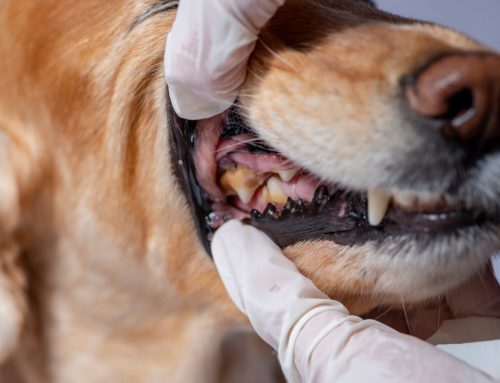
- Dental health: ongoing infection in the mouth adds a bacterial and inflammatory load that spills over into breathing risk, which is one reason professional dental cleanings matter more for these dogs than most families expect.
- Body weight: every extra pound crowds the chest and makes a softened windpipe work harder, so keeping your dog lean is one of the most powerful levers you have.
- Infection prevention: respiratory infections inflame an already fragile airway, so protecting against illnesses like canine influenza, parainfluenza, and kennel cough (bordetella) removes one avoidable trigger. Staying current on vaccinations keeps that risk low.
One of the most useful things you can do at home costs nothing. Counting your dog’s resting respiratory rate while they sleep, the number of breaths in one full minute, gives you an early-warning system, because a slow climb usually shows up before any new coughing does. Jot the number down now and then and bring the trend to your next visit. Under 30 breaths per minute while asleep is normal; 30 to 40 warrants a call to us, and over 40 should prompt a same-day visit.

What’s the Long-Term Outlook for a Dog With a Collapsing Trachea?
The long-term outlook for collapsed trachea in dogs is genuinely encouraging: most live full, comfortable lives for years when management stays consistent and flare-ups are handled early. How narrow the airway is at diagnosis turns out to be the strongest single predictor of how things go.
Milder grades caught early tend to do beautifully, and even dogs at the more serious end often stay comfortable for a long stretch with a layered plan and quick attention when a flare begins.
Many small dogs with this diagnosis are seniors juggling other things at the same time, like a heart murmur, achy joints, or dental disease. Managing the whole dog rather than just the windpipe is what keeps quality of life high, and regular recheck visits let us fine-tune every piece as the years add up.
Collapsing Trachea Questions Pet Families Ask Us Most
Can a collapsing trachea be cured, or only managed?
There’s no fix that restores soft cartilage to its original stiffness, so this is a condition we manage rather than cure. A lean body weight, a harness, a calm home, and medication tuned to your dog’s symptoms control the cough in the large majority of cases. Even stenting, the option reserved for severe collapse, holds the airway open instead of repairing it. Think of it as something you steer over time, not a problem you solve once and forget.
Is a collapsing trachea painful for my dog?
The collapse itself isn’t thought to hurt, but the coughing fits are exhausting and frightening, and the feeling of not getting enough air is distressing. That’s exactly why we treat it: not because the windpipe aches, but because easier breathing means a calmer, happier dog. If your dog seems anxious or worn out by the honking, that’s a reason to check in rather than a reason to wait it out.
My dog only honks when excited. Do we still need to do anything?
An occasional honk during a burst of excitement is common in mild cases and isn’t an emergency. It’s still worth a conversation, though, because catching a collapsing trachea early gives you the most room to slow it down. We can confirm what’s going on with an exam and imaging, then build a plan sized to how your dog is actually doing today.
Helping Your Small Dog Breathe Easier, Together
A honking, alarming cough is a hard thing to hear from a little dog, but a collapsing trachea is one of the more manageable long-term diagnoses we see, and you don’t have to piece the plan together alone. When the coughing fits start coming more often, or you just want to know what you’re dealing with, schedule a visit at Soda Springs Animal Clinic and we’ll look at the whole picture with you.