

Noise Phobias in Pets: More Than Just Fireworks
Fireworks get most of the attention, but for many dogs and cats the calendar of fear is far longer. Thunderstorms that roll through without warning. The furnace cycling on in October. A vacuum cleaner. A smoke detector with a dying battery at midnight. Noise phobia in pets is not limited to loud, sudden sounds; for some animals, even low-frequency vibration or the anticipation of sounds they have learned to associate with discomfort is enough to trigger a significant stress response. Living in a rural Idaho community means weather events and farm equipment sounds are part of the background, which makes identifying and addressing noise sensitivity genuinely important for quality of life.
At Soda Springs Animal Clinic, our small animal wellness services address behavioral health alongside physical health. We can help identify whether a noise response is situational anxiety or something more pervasive, and discuss behavioral strategies alongside medical support options that fit your pet’s specific situation. Contact us to talk through what your pet’s noise responses look like and what realistic solutions are available.
What Is Noise Phobia, and How Is It Different from a Normal Startle Response?
Every pet reacts to a startling sound occasionally. A dog that looks up when a car backfires and then returns to napping is having a normal, proportionate response. A dog that trembles for two hours, refuses to eat, and hides behind the toilet every time it rains is experiencing something categorically different.
Noise phobia is an extreme, persistent fear response to sounds that is out of proportion to any actual threat. Unlike a simple startle, a phobic response does not resolve quickly, and repeated exposure often makes it worse rather than better. Behavioral problems including noise phobia tend to be self-reinforcing: the fear response itself becomes the learned pattern, and the brain gets better at activating that response each time a trigger is encountered.
Phobias can develop from a single traumatic experience, from gradual sensitization over repeated exposures, or from genetic predisposition with no identifiable triggering event. Herding breeds, sporting breeds, and working dogs are among those with higher reported rates of noise sensitivity. Noise phobia also frequently co-occurs with separation anxiety. Importantly, underlying medical conditions can amplify noise sensitivity. A pet with chronic pain, an ear infection, or age-related hearing changes may react more intensely to sounds than they previously did. Ruling out physical contributors is one reason a veterinary assessment is useful early in the process, and our small animal diagnostics can help do exactly that.
The Triggers That Go Far Beyond July 4th
Why Thunderstorms Are Especially Hard to Manage
Thunderstorms are uniquely challenging because they are multi-sensory. Thunder and lightning are the obvious components, but many dogs appear to react before the first crack of thunder, responding instead to drops in barometric pressure, increases in static electricity, changes in smell, or distant low-frequency sound that humans cannot detect. This means that by the time you notice a storm is coming, your pet may already be hours into escalating anxiety.
Each storm season tends to worsen the response if the phobia is not actively managed. Sound recordings used in desensitization protocols cannot replicate barometric changes or static, which is why storm phobia often requires additional strategies beyond what works for other noise triggers.
In Southeast Idaho, thunderstorm season is real and recurring, with summer storm activity a reliable part of the year. Waiting until summer to address a pet’s storm anxiety means starting every season already behind.
Household Sounds That Are Easy to Overlook
Vacuum cleaners, blenders, garbage disposals, air compressors, dishwashers, smoke detectors, garage doors, and even the HVAC system cycling on can all be significant triggers for noise-sensitive pets. Dogs and cats hear at a broader frequency range than people and can detect sounds at far greater distances, which means appliances that seem moderate in volume to human ears may be genuinely intense for a pet.
Dog communication and body language helps you identify early stress signals before a pet reaches full panic. The stress ladder illustrates how anxiety escalates through progressive stages and is a practical framework for recognizing when a pet is moving from mild discomfort toward genuine distress. Catching those early signals allows for intervention before the response intensifies, which makes household appliances a much more manageable category than weather events.
What Does Noise Phobia Look Like?
Signs vary by severity and by individual animal. Some pets are subtle about their distress, and behavioral changes may not immediately seem connected to noise sensitivity.
Mild signs:
- Increased alertness or scanning the environment
- Slight panting outside of heat or exercise context
- Moving closer to you or seeking contact
- Ears back, tail lower than normal
Moderate signs:
- Trembling or shaking that does not resolve when the sound stops
- Hiding under furniture or in closets
- Pacing or inability to settle
- Yawning, lip-licking, or excessive grooming
- Refusing to go outside before or during a storm
Severe signs:
- Escape attempts that may result in injury
- Destructive behavior such as chewing through doors or breaking through screens
- Loss of bladder or bowel control
- Sustained vocalizing during noise events
- Self-trauma from repeated escape attempts
The long-term quality of life impact of severe noise phobia is significant. Pets who live in anticipatory dread of weather events or daily household activities experience chronic low-level stress that affects health, behavior, and the relationship between you and your pet. Bringing these concerns to us early rather than waiting for a crisis gives you the most options for management. Schedule a wellness visit to discuss what you are observing.
Creating Safety During Noise Events
Setting Up a Safe Space
The immediate priority during a noise event is reducing the pet’s exposure to the trigger and providing a space where they feel secure. A few practical measures that help:
- Create a dedicated retreat in an interior room, ideally without windows, where sound is naturally muffled
- Include familiar bedding with your scent, a favorite toy, and water
- Close curtains and blinds to block lightning flashes and reduce visual stimulation
- Play white noise, a fan, or calming classical music at a volume that helps cover external sounds
An important point that many people get wrong: comforting a frightened pet does not reinforce their fear. Fear is not a trained behavior. Providing calm reassurance helps many animals feel more secure, and refusing to engage when a pet seeks comfort during distress does not improve the phobia.
Pet-proofing your home during noise-sensitive periods means securing areas where a panicking pet could injure themselves: blocking access to stairs, checking that windows and doors are latched so escape attempts do not succeed, and removing objects that could cause harm.
Enrichment as a Foundation for Resilience
Pets with strong enrichment routines tend to be more resilient under stress. Enrichment builds confidence and provides outlets for anxious energy that would otherwise feed into a fear response.
Dog enrichment can be as simple as food puzzles, sniff walks, and training sessions with novel commands. More structured enrichment for dogs includes scent games, rotating toy collections, and structured play that gives a dog a job to do. Cats benefit from vertical climbing space, interactive feeding, and window perches that provide safe environmental stimulation. Enrichment is not a substitute for treating a phobia, but it is a meaningful supportive measure that improves baseline wellbeing.
Behavior Modification: Changing the Fear Response
Desensitization and Counterconditioning
Systematic desensitization involves controlled, gradual exposure to a feared sound starting at such a low volume that the pet shows no fear response, then progressively increasing the volume over many sessions as the pet remains calm. The goal is to rebuild the pet’s association with the sound from threat to neutral.
Counterconditioning pairs the sound with something genuinely positive: high-value treats, favorite toys, or enthusiastic play. Done consistently, this changes the emotional response from fear to anticipation. A dog who used to tremble at the sound of thunder might, after months of work, look up expectantly because thunder has reliably predicted something enjoyable.
These techniques require patience. Weeks to months are typical timelines depending on phobia severity, and the process should stop immediately if the pet shows distress at any point. Pushing too fast extends the timeline rather than shortening it. We can help develop a customized protocol appropriate for your pet’s history and specific triggers.
Positive Reinforcement: Building Coping Skills
Positive training focuses on rewarding calm, desired behaviors rather than correcting anxiety reactions. This approach helps pets develop specific coping behaviors: going to a designated safe spot on cue, settling on a mat during noise events, engaging with a toy when they feel uncertain.
Punishment for fear-based behavior is counterproductive and should not be used. Reprimanding a trembling dog does not teach the dog that thunder is safe; it teaches the dog that being afraid results in additional threat. This worsens the phobia and damages trust.
Medical and Supplemental Support
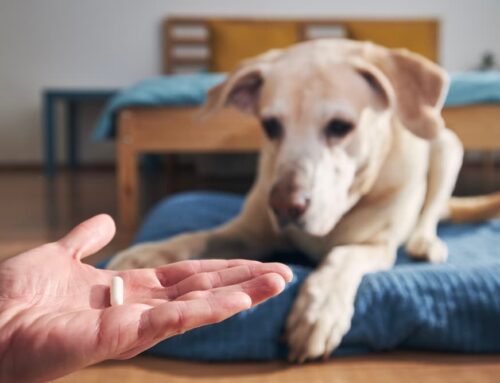
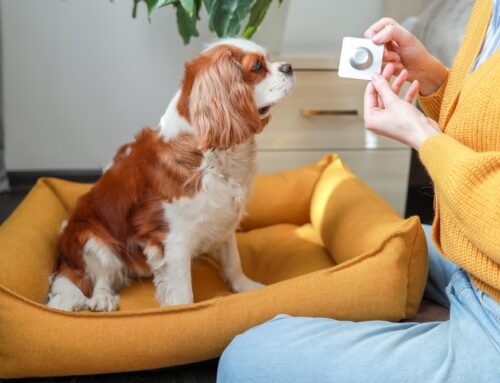
For moderate to severe noise phobias, behavioral modification alone is often insufficient. Anxiety at high intensity impairs a pet’s ability to learn, which means medication that reduces the fear response is not a shortcut but a prerequisite for behavior work to be effective.
Options range from supplements to prescription medications, and the right approach depends on the individual pet.
Pheromone products like the ThunderEase Calming Diffuser and ThunderEase Calming Collar release synthetic versions of the calming pheromone mother dogs produce, which can reduce baseline anxiety in some dogs. For cats, Feliway Spray works similarly, helping cats feel safer.
Calming supplements such as Composure Pro Soft Chews for Dogs, Composure Soft Chews for Cats, and Solliquin Calming Support use a blend of ingredients that support relaxation without sedation.
Prescription medications are appropriate for moderate to severe phobias and are prescribed based on the individual patient. Situational medications taken before a predictable event work well for phobias tied to specific occasions. Daily medications are used for pets with chronic, generalized anxiety where the phobia is part of a broader anxiety disorder. Medications should be started well before a predicted noise event, not in the moment after anxiety has already escalated. We can discuss appropriate options and monitor response at follow-up visits.
Preventing Phobias Through Early Socialization
Puppies and kittens have a critical socialization window during which they are most receptive to learning that novel things are safe. Introducing a wide range of sounds during this period, at low volumes and always paired with positive experiences, builds resilience that carries forward. This includes household appliances, weather sounds, traffic, farm equipment, and anything else the pet is likely to encounter in their environment.
The window closes, but gradual, positive exposure remains valuable throughout a pet’s life. Young adult dogs who have not been exposed to a particular sound are not yet phobic; early intentional exposure can prevent a phobia from developing at all.

Frequently Asked Questions About Noise Phobias
Is my pet’s noise phobia getting worse because I’m comforting them?
No. Comforting a frightened pet does not reinforce the fear. Fear is a physiological response, not a learned behavior that is rewarded and repeated. Calm reassurance helps many animals feel safer during stressful events.
Can noise phobia go away on its own?
Untreated noise phobias typically worsen over time, not improve. Each exposure without support reinforces the fear response, and the threshold for triggering the phobia often lowers with repeated experiences.
How long does desensitization take?
It depends on phobia severity and consistency of the training program. Mild to moderate phobias may show meaningful improvement within weeks to months. Severe phobias require longer timelines and often benefit from concurrent medical support.
Are there medications that can help during a storm?
Yes. Situational anti-anxiety medications can reduce the fear response during a predicted event and are most effective when given in advance, before anxiety escalates. Contact us to discuss whether prescription support is appropriate for your pet.
My cat hides during loud sounds but seems fine otherwise. Should I be concerned?
Hiding is a normal coping behavior for cats and does not necessarily indicate phobia. If your cat recovers quickly, resumes normal activities, and eats and uses the litter box normally, they are likely managing appropriately. If hiding is prolonged, eating stops, or the response is escalating, a veterinary visit is worthwhile.
Helping Your Pet Find Steady Ground
Noise phobia is one of the more frustrating behavioral challenges to live with, partly because so many triggers are beyond anyone’s control. But it is also one of the more treatable. With the right combination of environmental management, gradual behavior modification, and appropriate medical support when needed, most pets improve meaningfully over time.
At Soda Springs Animal Clinic, we bring the same commitment to behavioral health that we bring to every other aspect of veterinary care: patient, honest, practical, and centered on what is actually right for each individual animal and family. Contact us to schedule an appointment and start building a plan that gives your pet more good days than frightening ones.




Leave A Comment